
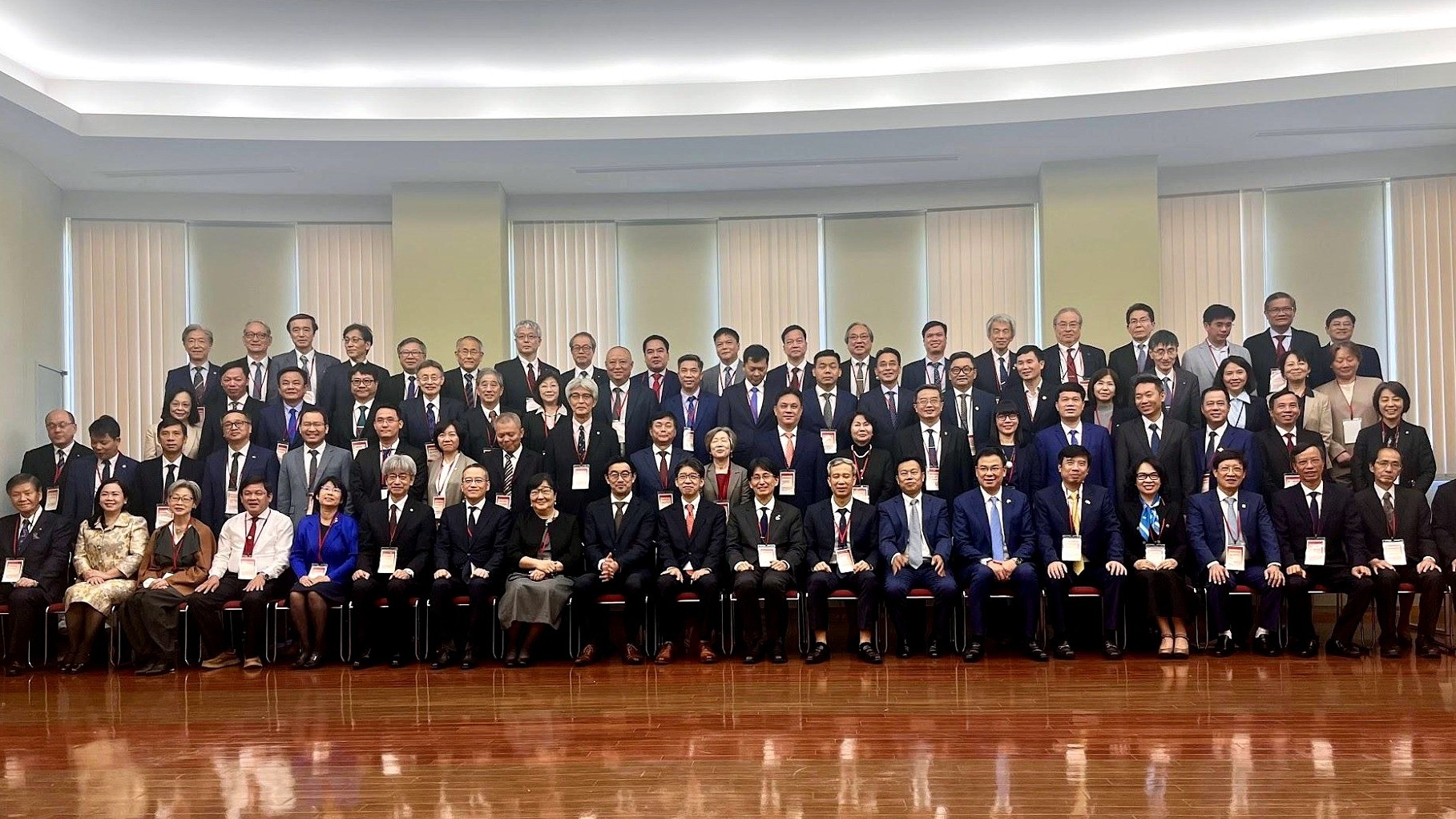
As part of a working visit to Japan from October 3 to 10, 2026, Assoc. Prof. Dr. Le Hieu Giang, Secretary of the Party Committee and President of Ho Chi Minh City University of Technology and Engineering (HCM-UTE, formerly Ho Chi Minh City University of Technology and Education), attended the 4th Vietnam–Japan University Presidents’ Conference with the delegation of the Ministry of Education and Training (MOET). The delegation was led by Deputy Minister of Education and Training Le Quan and included leaders of 38 Vietnamese higher education institutions.
The 4th Vietnam–Japan University Presidents’ Conference is an important forum for strengthening ties and promoting cooperation in training, scientific research and innovation between higher education institutions of the two countries.
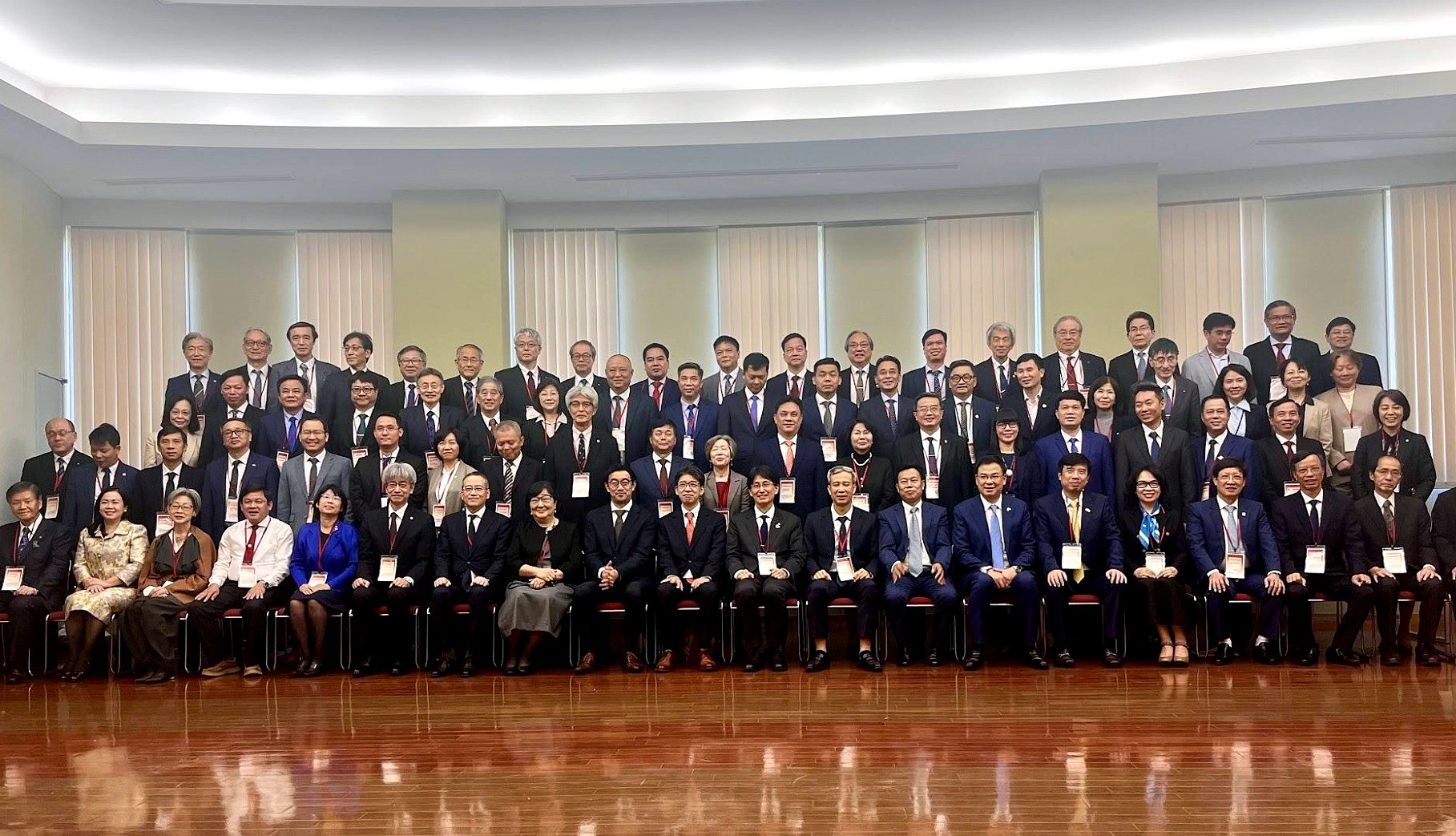
Held on October 8–9, 2026, under the theme “Achievements and Future Vision of Vietnam–Japan Academic Cooperation,” the Conference opened up connections with Japanese universities and companies as well as the Vietnamese engineering community in Kansai, helping to advance the University’s international cooperation in education, training and technology. Alongside Vietnamese higher education institutions, the Conference brought together more than 30 Japanese higher education institutions, as well as representatives of government agencies, research organizations and businesses from both countries.
Accompanying Assoc. Prof. Dr. Le Hieu Giang on the visit were Assoc. Prof. Dr. Vo Viet Cuong, Deputy Director of the Office of International Affairs, and Assoc. Prof. Dr. Pham Huy Tuan, Deputy Director of the Institute of International Education.
During the visit, the HCM-UTE delegation also reached out to Japanese universities and companies, helping to expand the University’s cooperation network in training, scientific research and technology development.
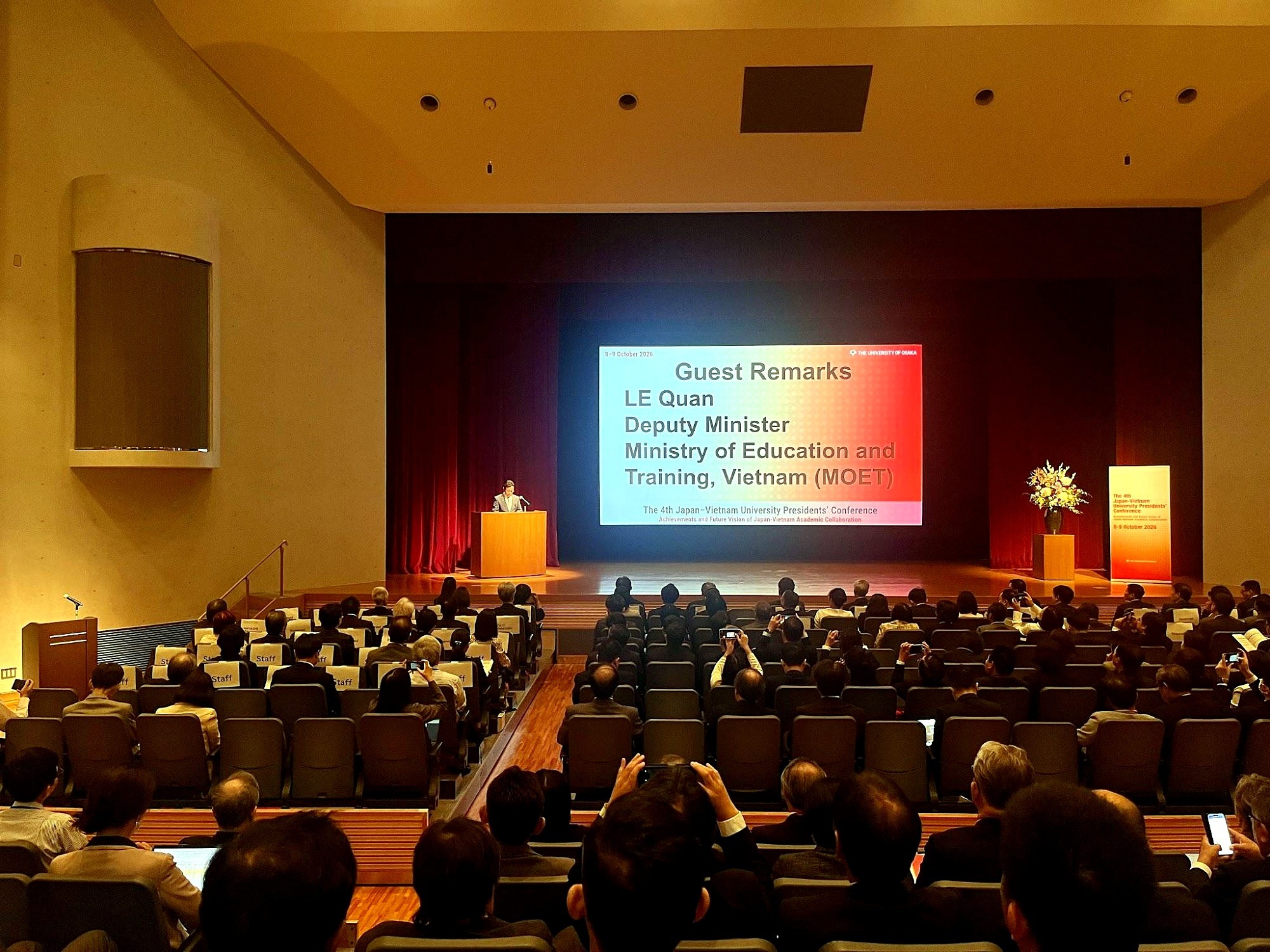
Speaking at the Conference, Deputy Minister of Education and Training Le Quan highlighted Vietnam’s goal of becoming a developed, high-income country by 2045, with education, science, technology and innovation serving as key drivers. The implementation of Resolution No. 57-NQ/TW on breakthroughs in science, technology, innovation and national digital transformation, and Resolution No. 71-NQ/TW on breakthroughs in education and training development, opens up new directions and opportunities for international cooperation in higher education.
Against this backdrop, the Conference gave Vietnamese higher education institutions an opportunity to strengthen ties with Japanese partners, share their strengths in training and research, and explore cooperation that fits each institution’s development direction. It was also an opportunity for HCM-UTE to expand its network of international partners and promote in-depth cooperation programs that link training and scientific research with the needs of human resource development, technology and innovation.
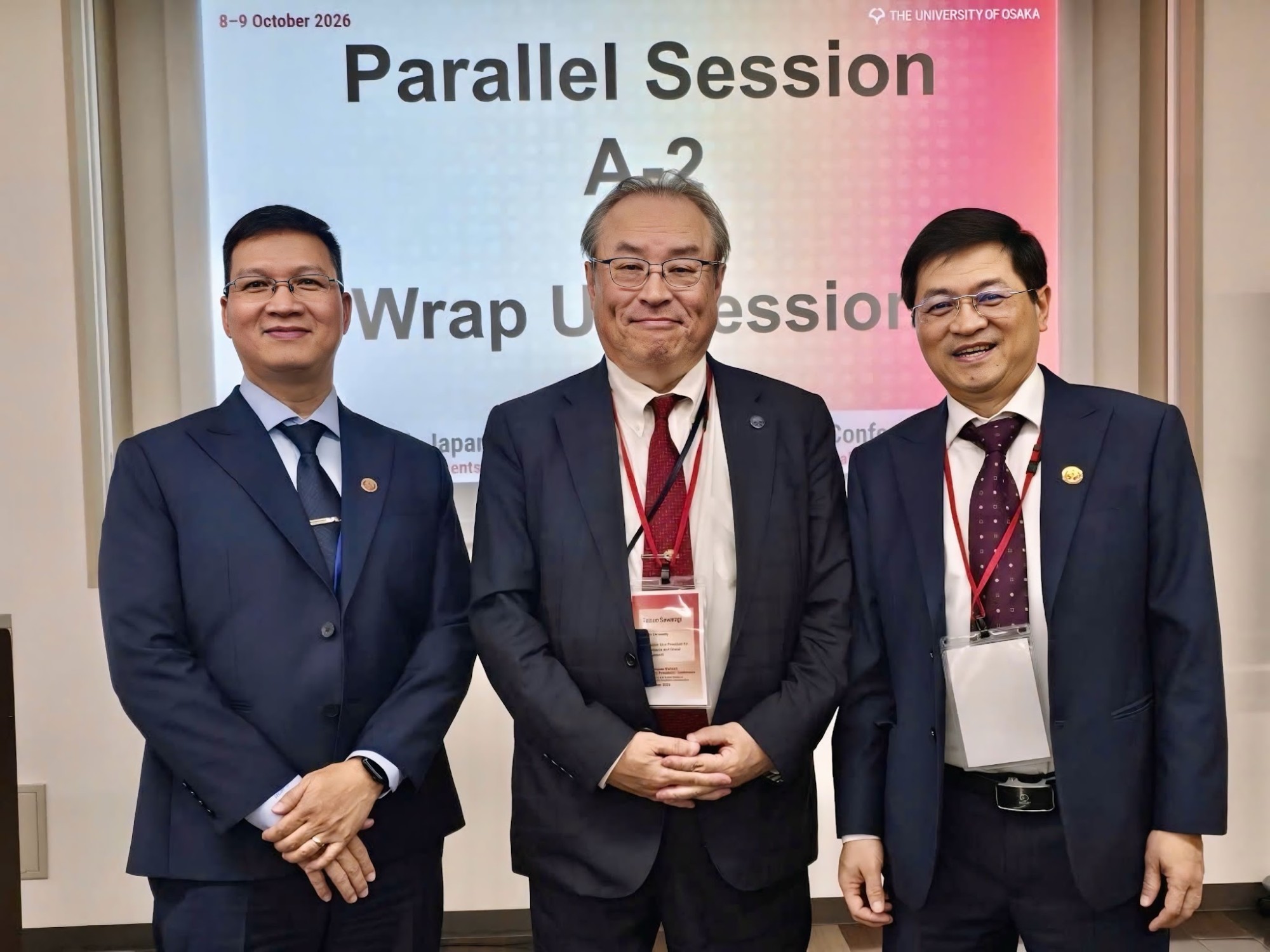
At the Individual Meetings of the Conference, the delegation introduced HCM-UTE as a multidisciplinary public university with more than 30,000 students and 52 undergraduate programs, 23 of which are taught in English, as well as 21 master’s programs, 12 doctoral programs and a network of more than 1,600 partner companies. For each university, HCM-UTE had prepared a curriculum benchmarking plan and a tailored cooperation proposal in advance.
The first meeting was held with Toyohashi University of Technology, where Assoc. Prof. Dr. Vo Viet Cuong once studied. The two sides discussed cooperation in robotics, automation, mechatronics, semiconductors, sensors, and energy and the environment. HCM-UTE proposed prioritizing the exchange of graduate students and researchers, opening pathways for its students to pursue English-taught master’s and doctoral programs, and promoting faculty exchange, joint supervision of doctoral students and links between research groups.
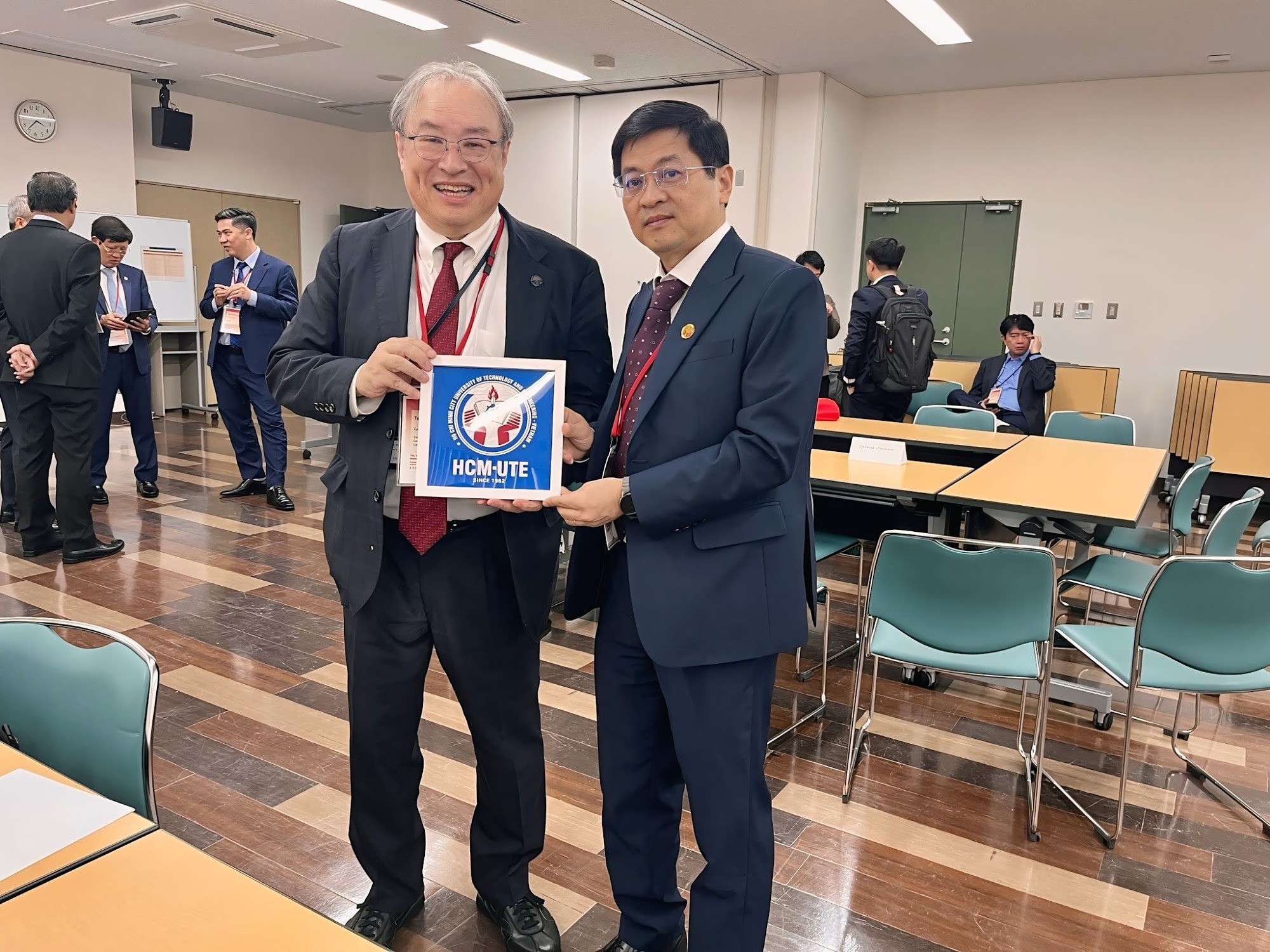
At Nagoya University, one of Japan’s seven former Imperial Universities and an institution associated with several Nobel laureates, HCM-UTE proposed a pilot program sending its students for an English-taught semester through the NUPACE exchange program, along with the exchange of graduate students and researchers. The two sides also discussed linking research groups in hydrogen energy, semiconductor materials and artificial intelligence for engineering applications. The academic ties of HCM-UTE faculty members who studied and conducted research in Japan served as an important bridge, helping both sides quickly find common ground.
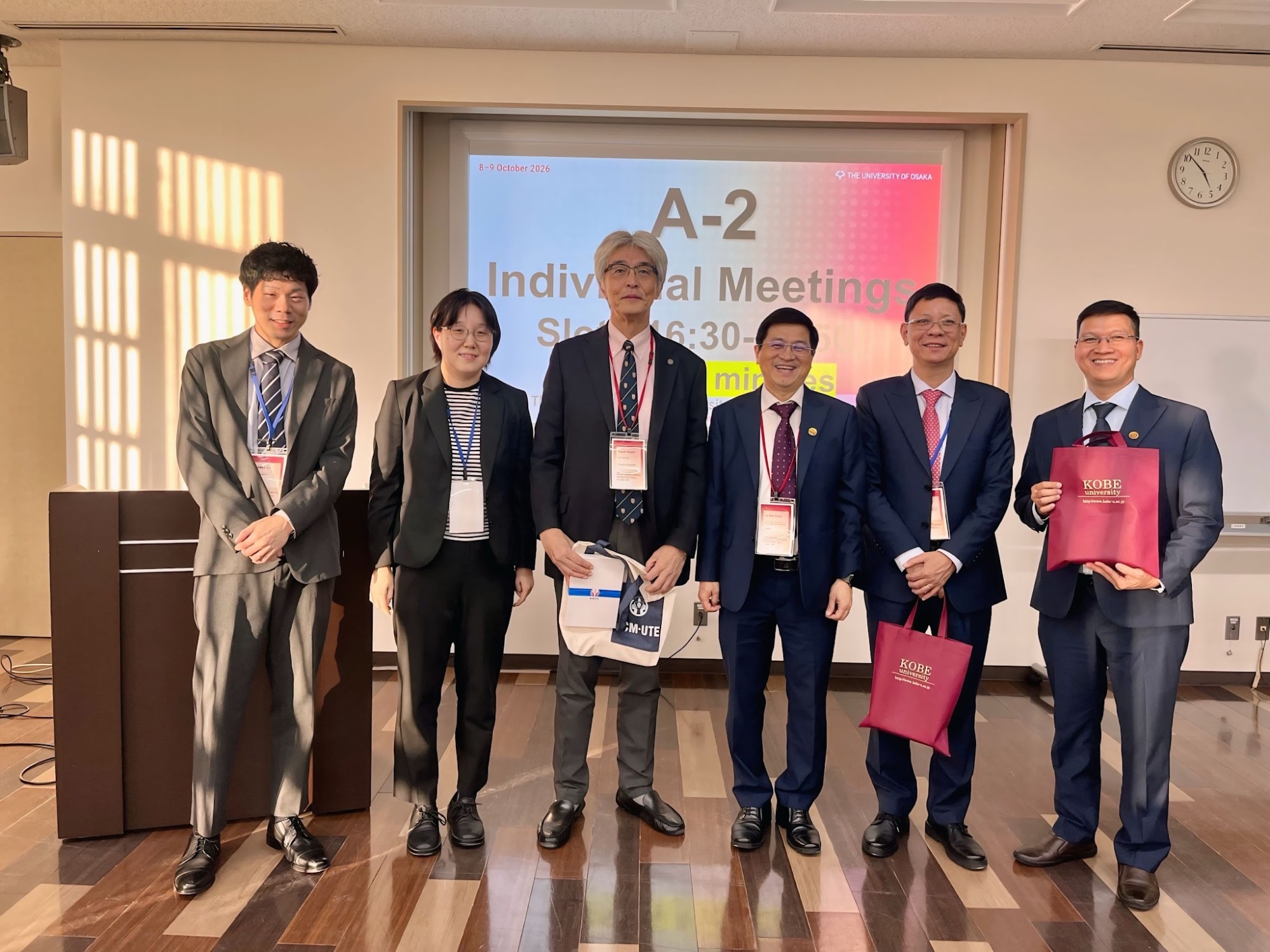
With Kobe University, the two sides looked toward interdisciplinary cooperation linking engineering with sustainable development, the environment, food and management. HCM-UTE proposed prioritizing graduate student exchange in food, the environment, economics and management, and invited Kobe researchers to take part in joint workshops, co-supervision and collaborative research projects. In addition to the three individual meetings, the delegation also held discussions with representatives of Kyoto University, Hokkaido University, Saga University and Nagaoka University of Technology.
A common thread in HCM-UTE’s proposals was a focus on pressing issues facing Vietnam. The University invited its partners to jointly develop applied research projects for the Mekong Delta on water monitoring and saltwater intrusion, climate-resilient agriculture, the circular bioeconomy, disaster-resilient infrastructure and food safety. These topics provide a basis for the partners to jointly apply for international research funding such as SATREPS (JICA – JST), e-ASIA (JST) and the Japan Society for the Promotion of Science (JSPS). As agreed after the Conference, each partner will appoint a focal point so that the two sides can draft a cooperation outline for one or two priority topics.
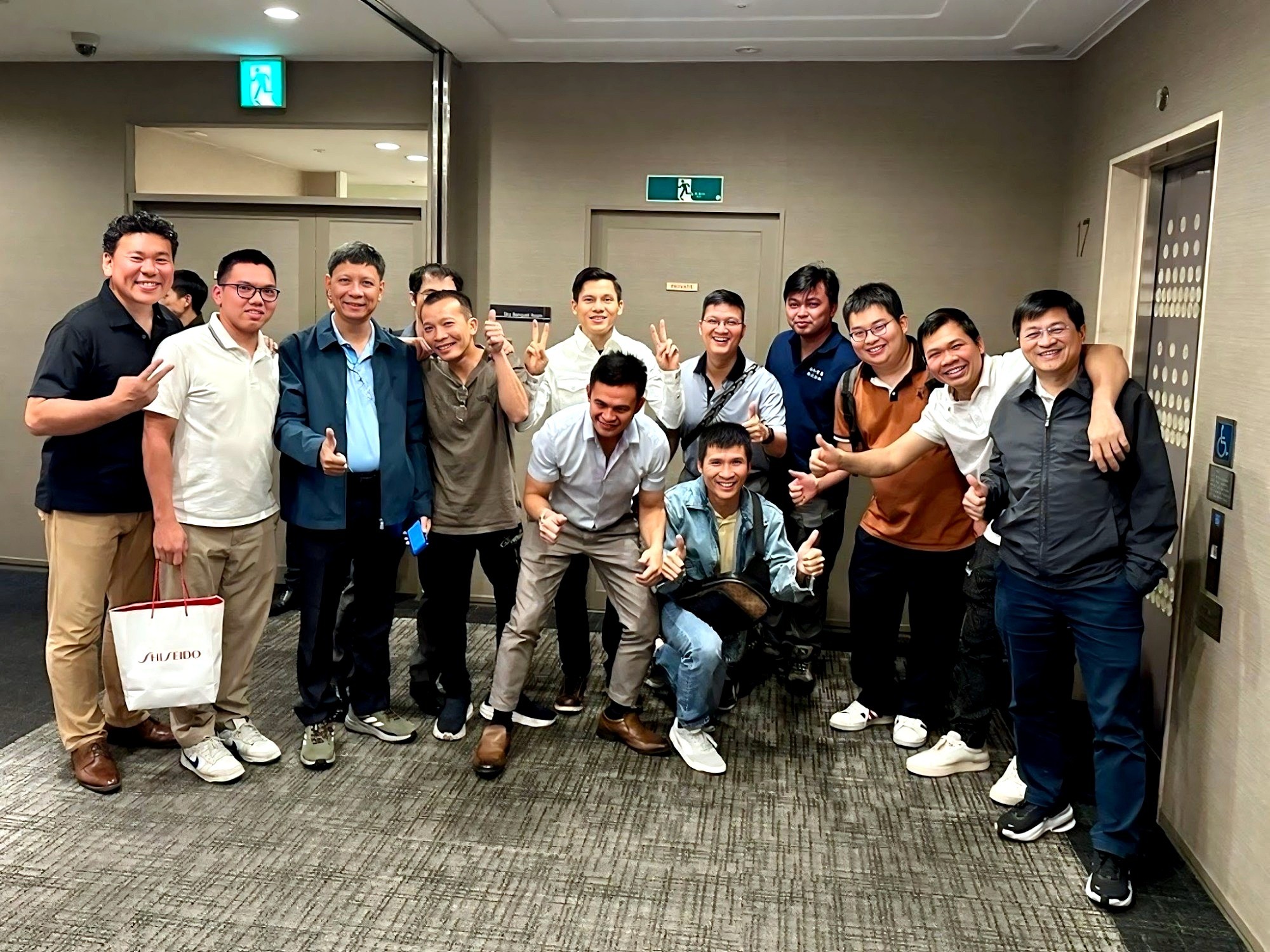
During its eight-day visit to Japan, the delegation also visited Sanyo and held a working session with Yaskawa Electric Corporation, two long-standing industry partners of the University. On the evening of October 8, 2026, in Osaka, the delegation met more than 20 Vietnamese engineers and entrepreneurs working in the mechanical engineering sector in the Kansai region, including alumni of HCM-UTE, Hanoi University of Science and Technology and Ho Chi Minh City University of Technology – Vietnam National University Ho Chi Minh City. The meeting opened new channels for internships and employment in Japan for HCM-UTE students.
The story of HCM-UTE’s cooperation with Sanyo and Yaskawa Electric Corporation is featured in a separate article here.
The connections made at the Conference in Osaka go beyond handshakes. Behind them lie expectations of research with real-world value, and of opportunities for the University’s students, graduate students, staff and faculty members to train, grow and deepen their expertise in an international academic environment. Building on this foundation, HCM-UTE continues its steady journey of global engagement, bringing its engineering and technological knowledge ever closer to innovation and the sustainable development of the country.
About the University’s Name Change: On December 26, 2025, the Prime Minister of Vietnam issued Decision No. 2809/QĐ-TTg, officially renaming Ho Chi Minh City University of Technology and Education to Ho Chi Minh City University of Technology and Engineering (HCM-UTE). The new name reflects the University’s multidisciplinary development strategy, its strengths in technology and engineering, and its current institutional stature. Before 2007, the University was Vietnam’s leading institution for technical teacher education. Following changes to the national higher education program classification system in 2007, the University expanded its focus to technology, engineering, and related disciplines. The name change aligns with Vietnam’s Higher Education Network Development Plan for 2021-2030 with a vision toward 2050, addresses the demand for high-quality human resources in the digital transformation era, and reaffirms HCM-UTE’s role as a national key university in technology and engineering. |
|---|
Text: PP – Photos: HCM-UTE Delegation