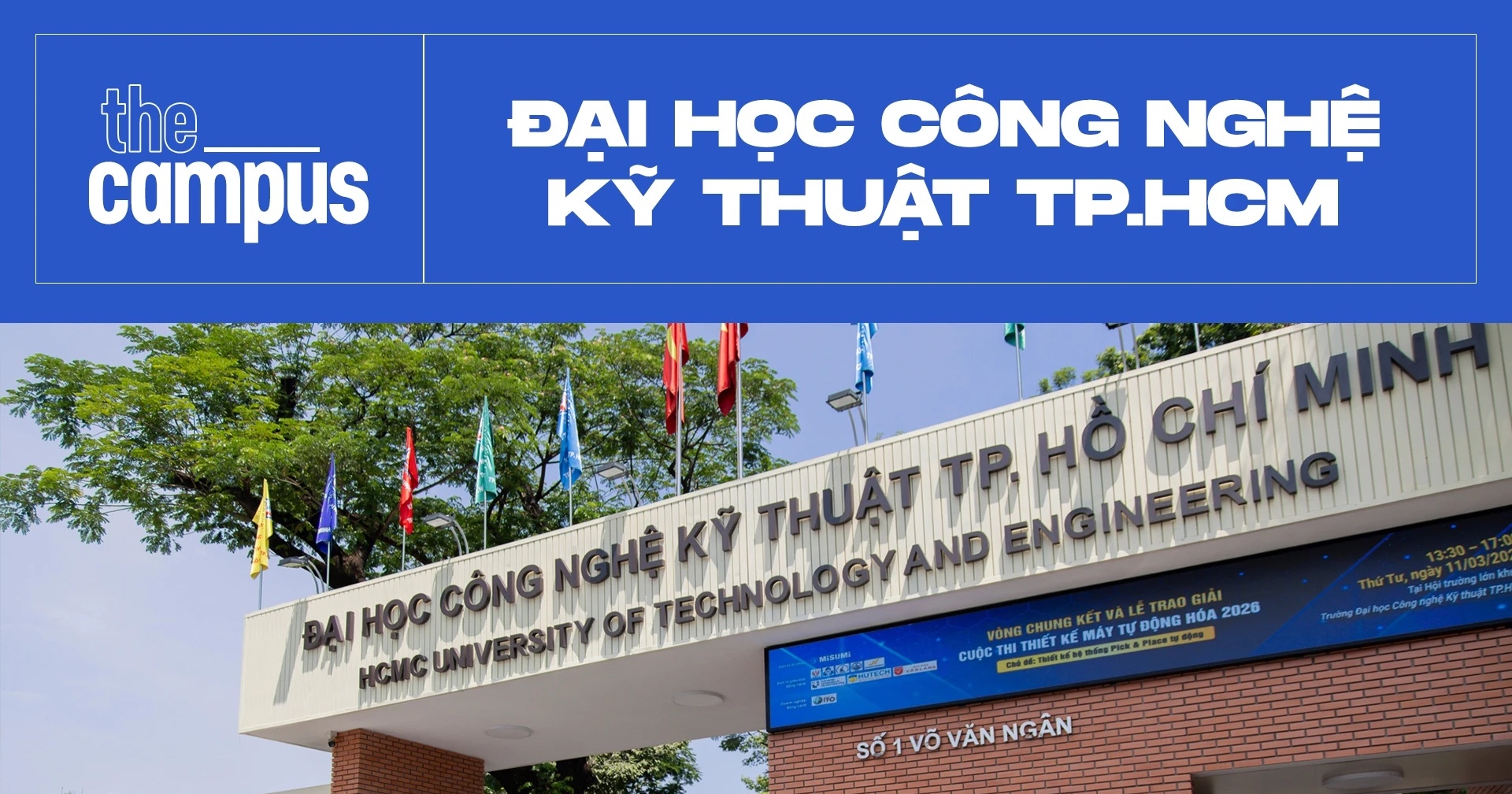

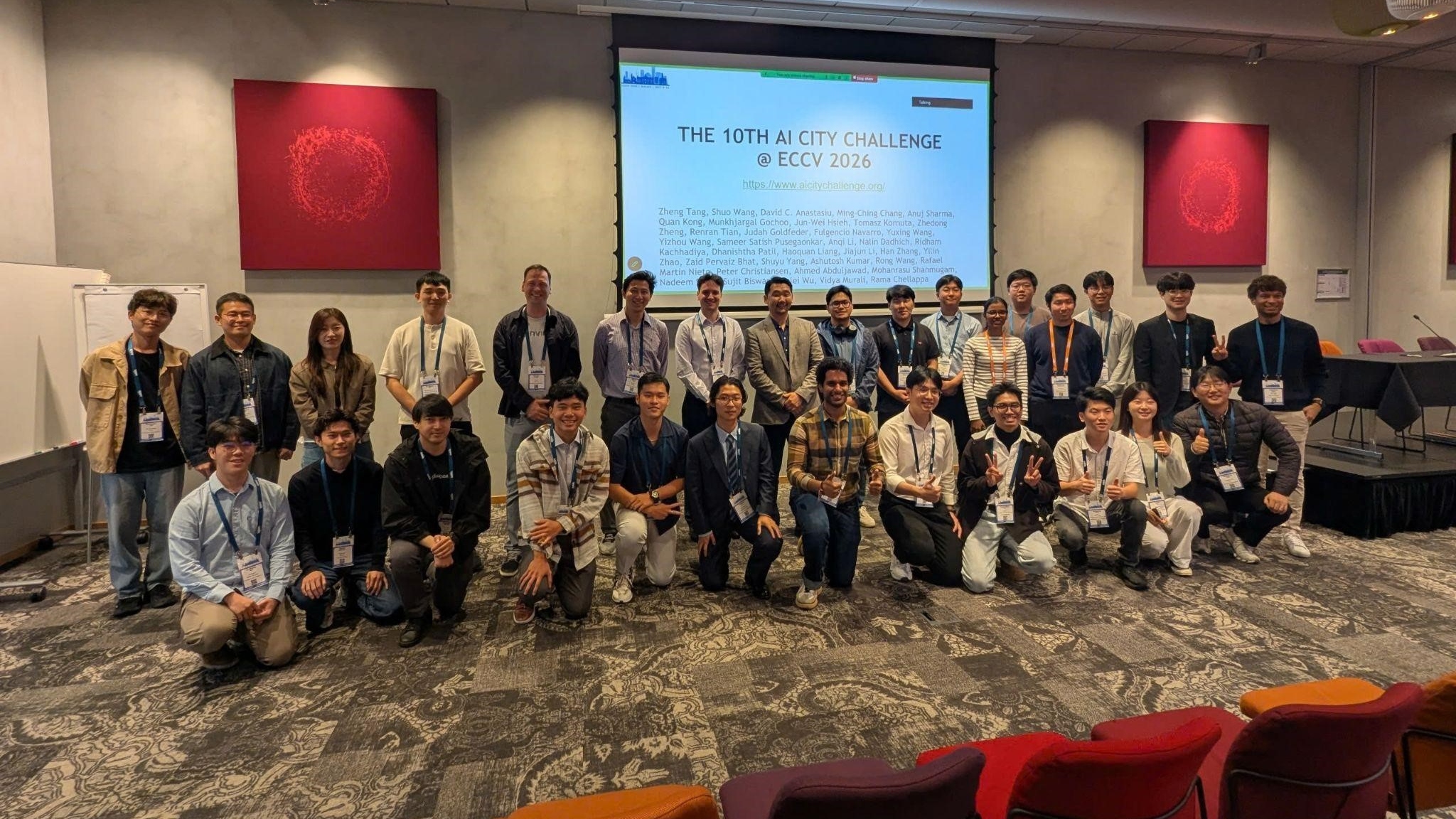
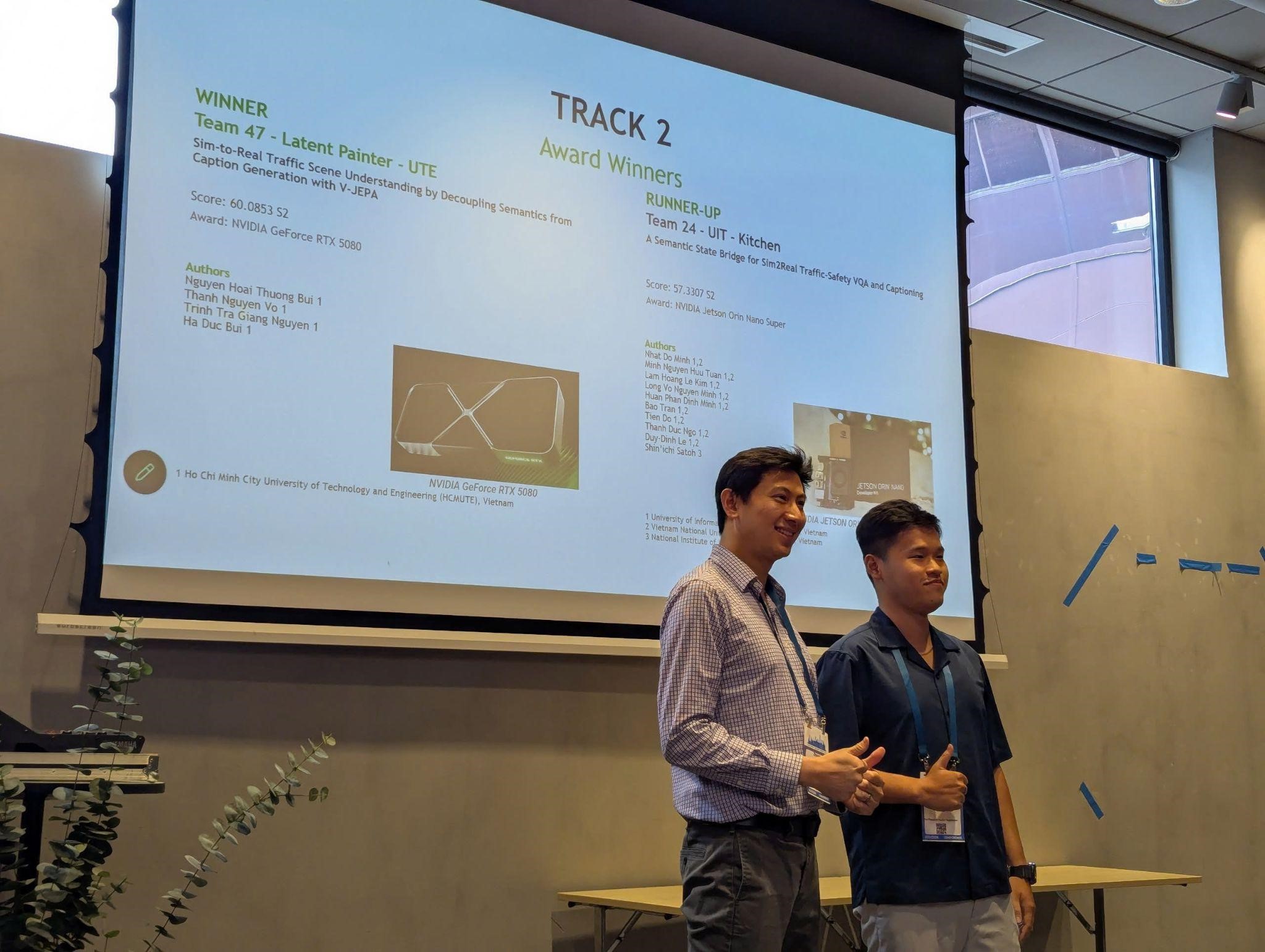
On September 9, 2026, at the closing and awards ceremony of the international AI City Challenge 2026, the Latent Painter – UTE research team from Ho Chi Minh City University of Technology and Engineering (HCM-UTE, formerly Ho Chi Minh City University of Technology and Education) won First Prize in Track 2 and Third Prize in Track 5.
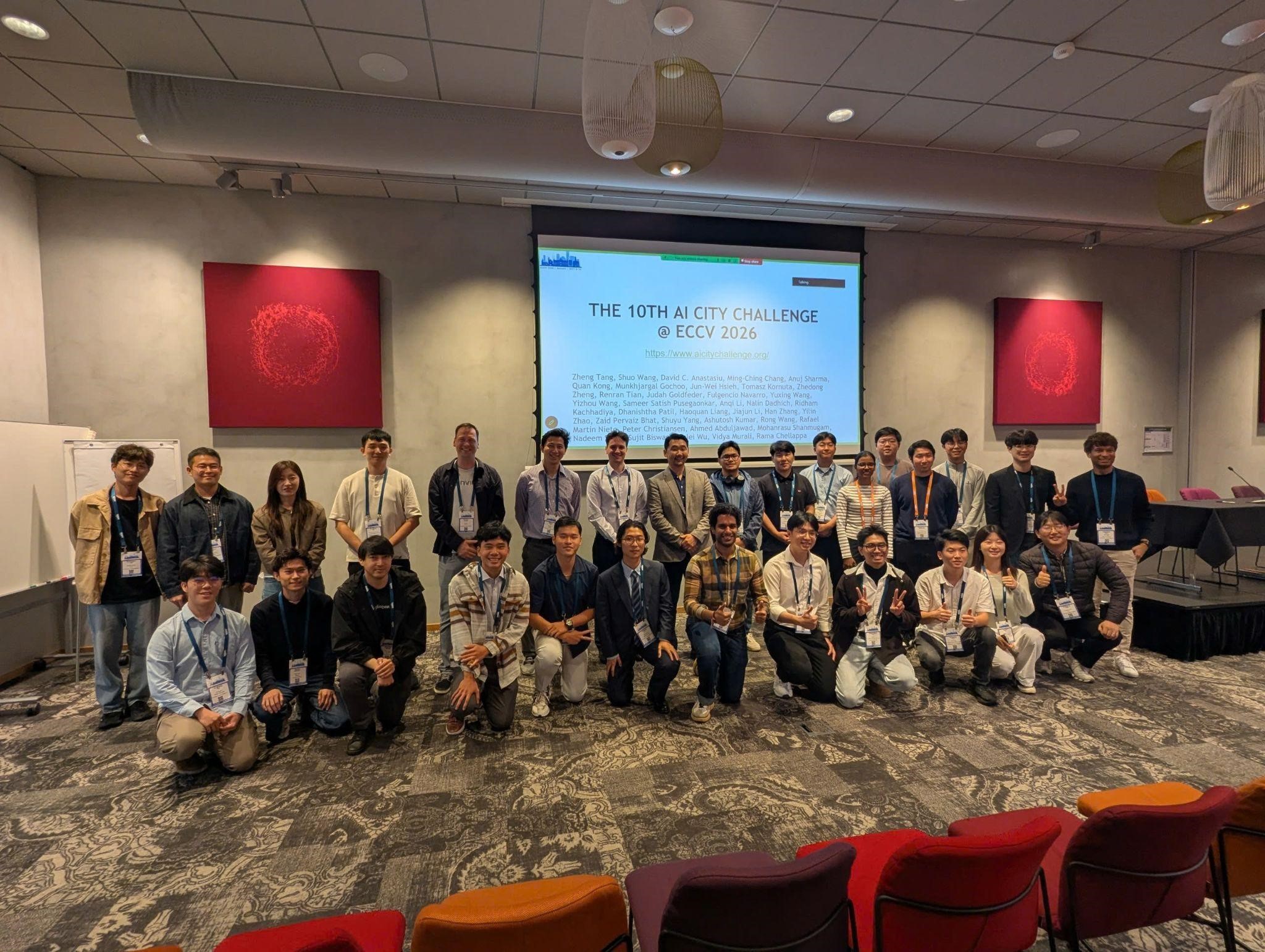
The AI City Challenge is one of the most prestigious international competitions in artificial intelligence (AI), focusing on problems in intelligent transportation and smart cities. Held as part of leading scientific conferences such as CVPR, ICCV and ECCV, and supported by major technology corporations including NVIDIA, Milestone Systems and Woven by Toyota, the competition attracts hundreds of teams from many countries and fosters research with both scientific and practical value.
Its challenges are closely tied to real-world needs, making the competition an “R&D arena” that brings together universities, research institutes and technology corporations from around the world, such as Baidu, Tencent and Alibaba, as well as major Vietnamese technology companies such as Viettel, VNPT and FPT. Participants compete to test their technological capabilities and the potential of their advanced AI solutions for real-world application and commercialization.
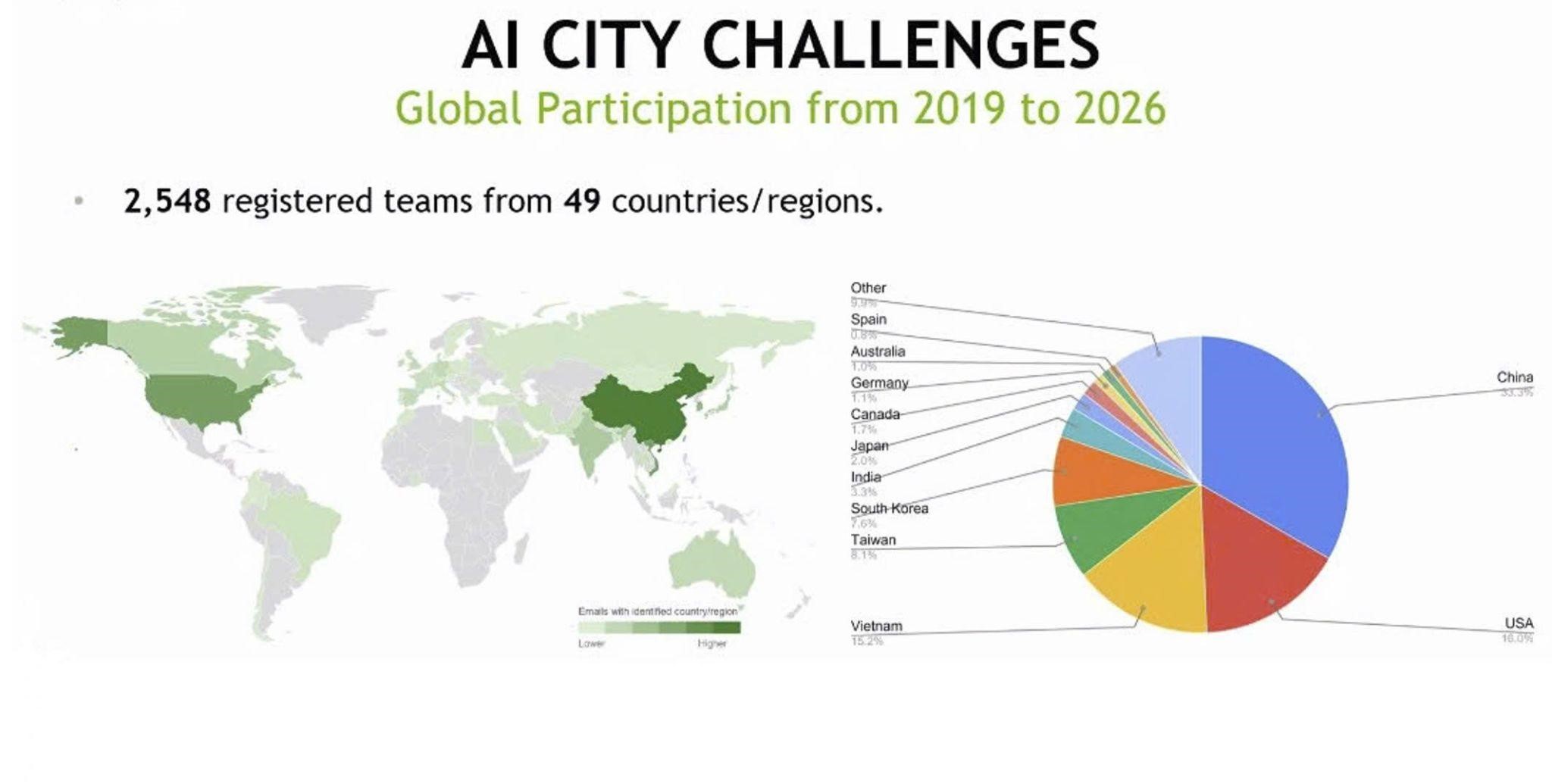
In 2026, the competition drew 325 teams from 26 countries and territories, competing across six challenge tracks. What made this year’s challenge particularly demanding was that the problems went beyond simple recognition, requiring AI systems to reason, predict, generalize and adapt to changing environments.
Specifically, systems had to learn from simulated data yet still perform accurately on real-world video; understand images in order to analyze them and answer context-based questions; predict how traffic would unfold rather than merely recognize what was happening; and adapt on their own to data recorded in an entirely new city.
These requirements confront AI systems with a wide gap between training data and the real world, where settings, weather, camera angles, traffic conditions and human behavior are constantly changing. The high demands for generalization, reasoning, prediction and domain adaptation made this year’s challenges significantly more complex than traditional AI problems.
Over the years, top positions at the AI City Challenge have mostly gone to leading international universities or the research and development centers of major global technology corporations. Leading Vietnamese technology companies Viettel and VNPT have also topped a track, in 2022 and 2024 respectively.
Against this competitive backdrop, the Latent Painter – UTE research team made its mark with two achievements:
-
First Prize in Track 2 – Transportation Safety Understanding and Captioning;
-
Third Prize in Track 5 – Generative Traffic Video Forecasting.
Supervised by Dr. Bui Ha Duc, the HCM-UTE team consisted of three members: Bui Nguyen Hoai Thuong, Vo Thanh Nguyen and Nguyen Trinh Tra Giang. One of the team’s distinctive features was its small size, with one master’s student and two fourth-year undergraduate students.
The team was formed and grew through the Bosch Future Mobility Challenge (BFMC), where it twice ranked first in Vietnam and represented the country in the global round. Through BFMC, the members researched and developed autonomous vehicle systems in an international competition setting, while gaining experience in environmental perception, localization, planning and control. This experience laid an important foundation for the team to tackle more complex AI problems at the AI City Challenge 2026, particularly understanding traffic situations, reasoning about the relationships between agents and predicting how events will unfold.
A highlight of the HCM-UTE team’s solutions was the use of a world model, enabling AI not only to recognize images but also to understand the state of a traffic scene, the relationships between agents and how the situation develops.
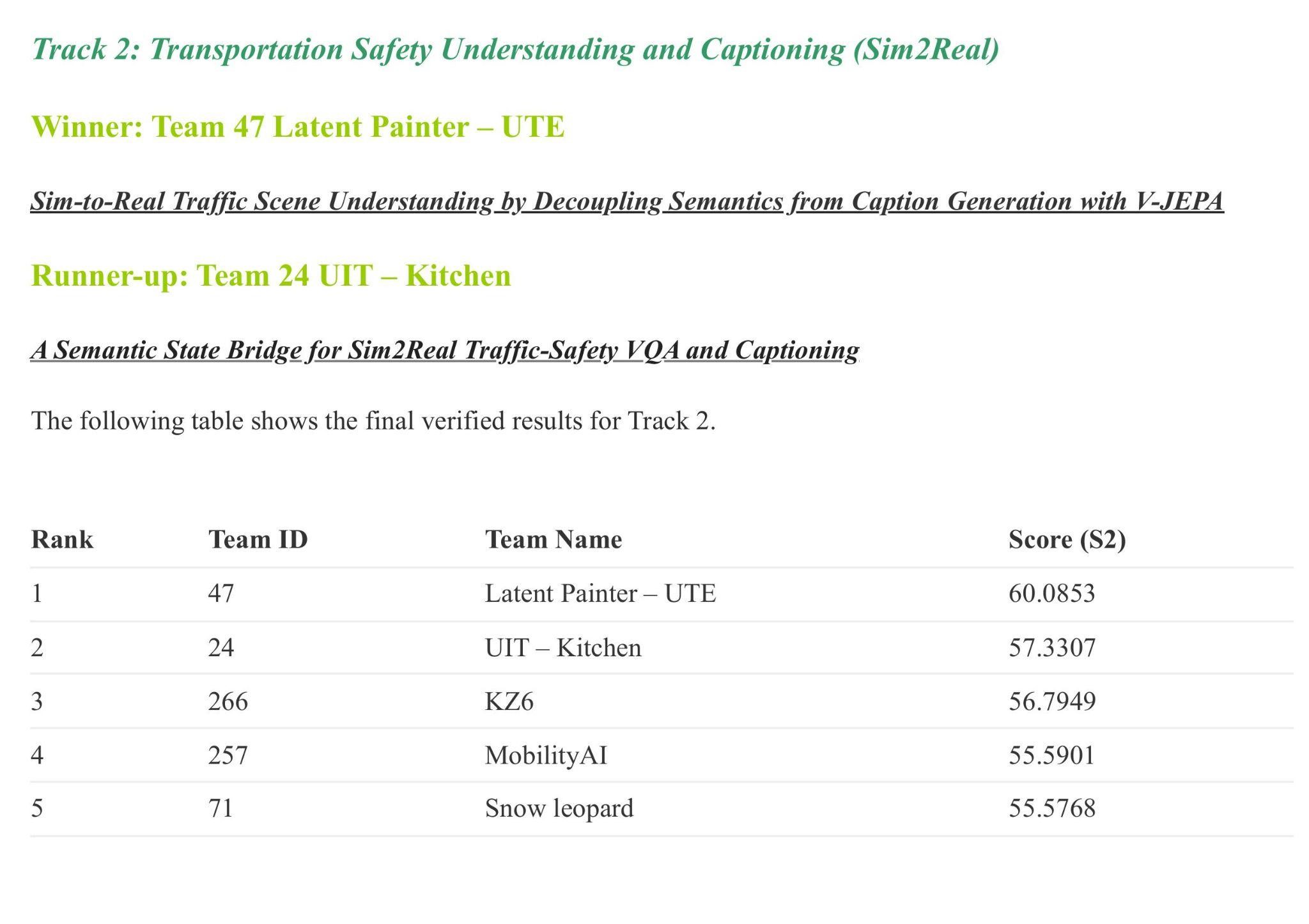
In Track 2 – Transportation Safety Understanding and Captioning, the team built a Sim2Real solution that allows the system to learn from simulated traffic data while still generalizing to real-world video. Rather than having a language model generate answers directly, which can lead to “hallucinations” and inaccurate information, the system first learns a semantic representation of the traffic situation and then converts it into visual question answering (VQA) responses or descriptive captions. With this approach, Latent Painter – UTE took first place in Track 2, outscoring all other teams on every evaluation criterion of the track.
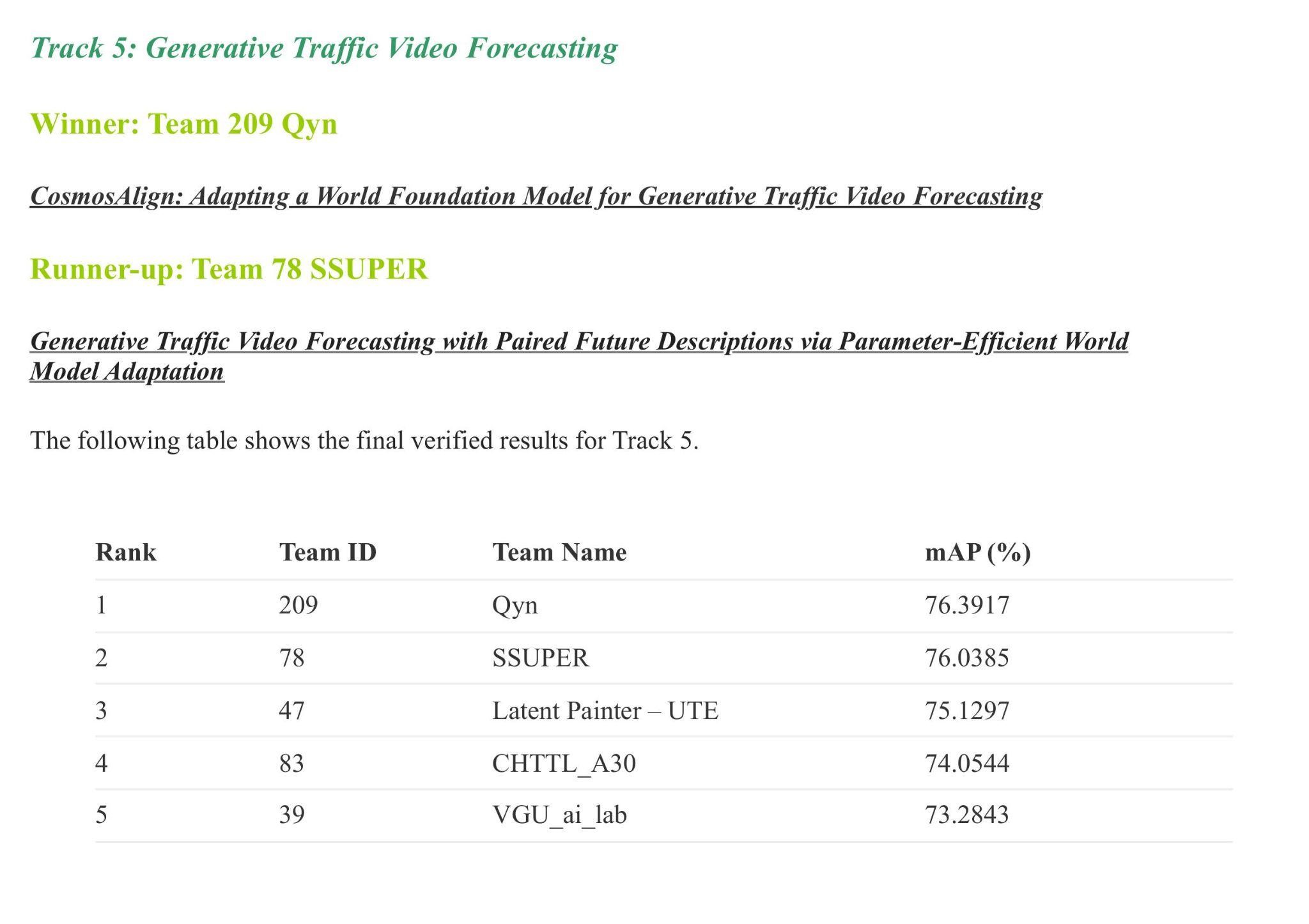
The team further developed the world model concept in Track 5 – Generative Traffic Video Forecasting. In this track, the system not only analyzes what is happening but also forecasts future traffic developments based on past observations. The HCM-UTE team scored 75.1297, placing third and closely trailing the two leading teams, which scored 76.3917 and 76.0385. The results reflect the team’s consistent approach of moving AI beyond conventional image recognition toward understanding, reasoning, prediction and modeling of the traffic world.
The achievement at the AI City Challenge 2026 recognizes the research capabilities, technological mastery and determination of HCM-UTE learners to take on complex scientific problems. It also affirms the quality of the University’s training and scientific research, as well as its strategy for developing high-tech human resources in artificial intelligence, computer vision and intelligent transportation.
About the University’s Name Change: On December 26, 2025, the Prime Minister of Vietnam issued Decision No. 2809/QĐ-TTg, officially renaming Ho Chi Minh City University of Technology and Education to Ho Chi Minh City University of Technology and Engineering (HCM-UTE). The new name reflects the University’s multidisciplinary development strategy, its strengths in technology and engineering, and its current institutional stature. Before 2007, the University was Vietnam’s leading institution for technical teacher education. Following changes to the national higher education program classification system in 2007, the University expanded its focus to technology, engineering, and related disciplines. The name change aligns with Vietnam’s Higher Education Network Development Plan for 2021-2030 with a vision toward 2050, addresses the demand for high-quality human resources in the digital transformation era, and reaffirms HCM-UTE’s role as a national key university in technology and engineering. |
|---|
Text: Nhat Tan – Translation: PP