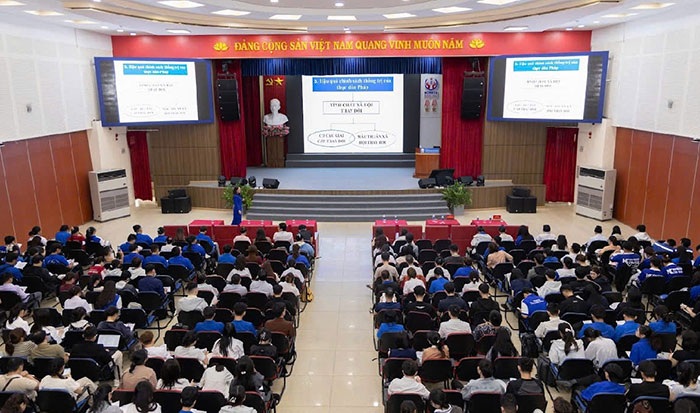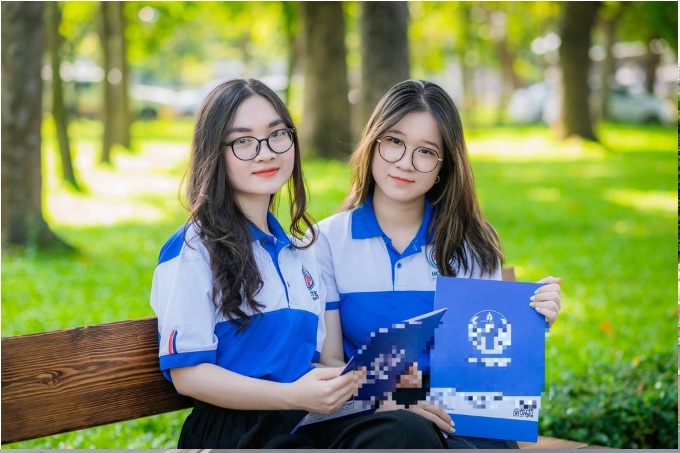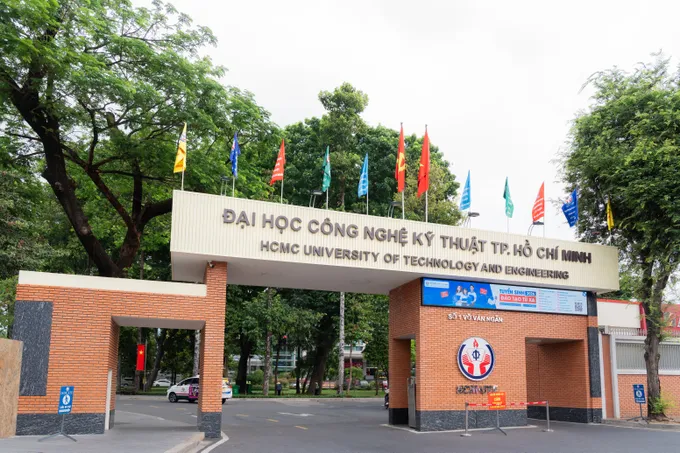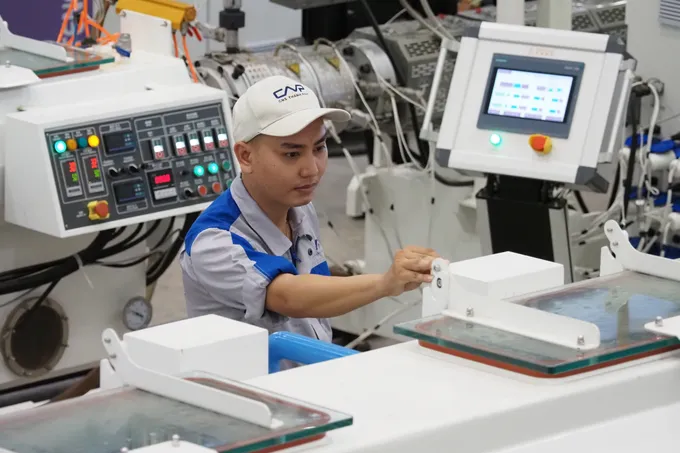

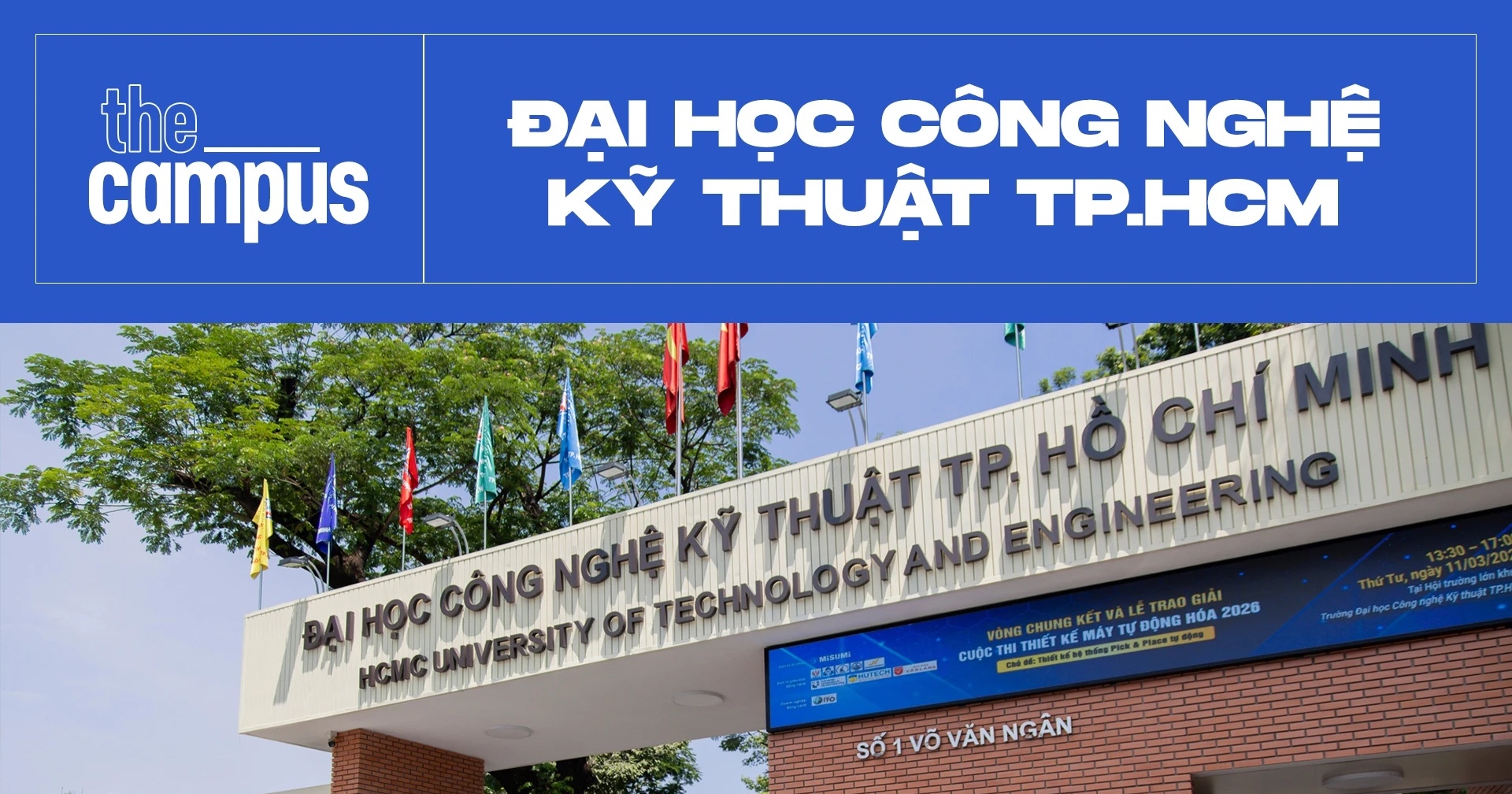
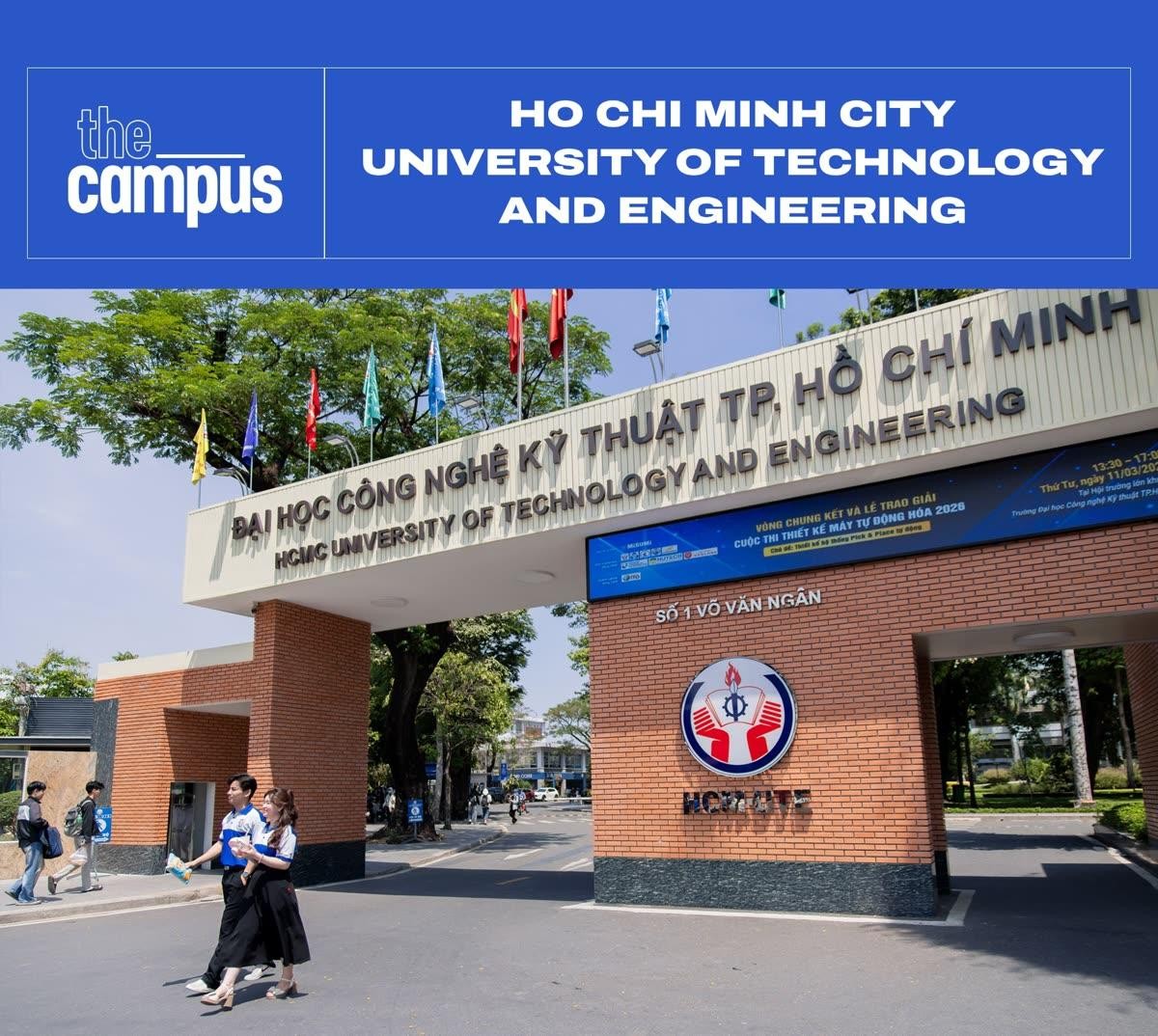
The Vietnamese online newspaper Tri Thuc - Znews has published a photo feature taking readers inside the nearly 31-hectare campus of Ho Chi Minh City University of Technology and Engineering (HCM-UTE, formerly Ho Chi Minh City University of Technology and Education), from its tree-lined walkways and campus cats to its laboratories, library and sports facilities.
IN THE PRESS | Tri Thuc - Znews, Education | 2026
Original headline, translated: “The stunning spaces inside a leading engineering university in southern Vietnam”
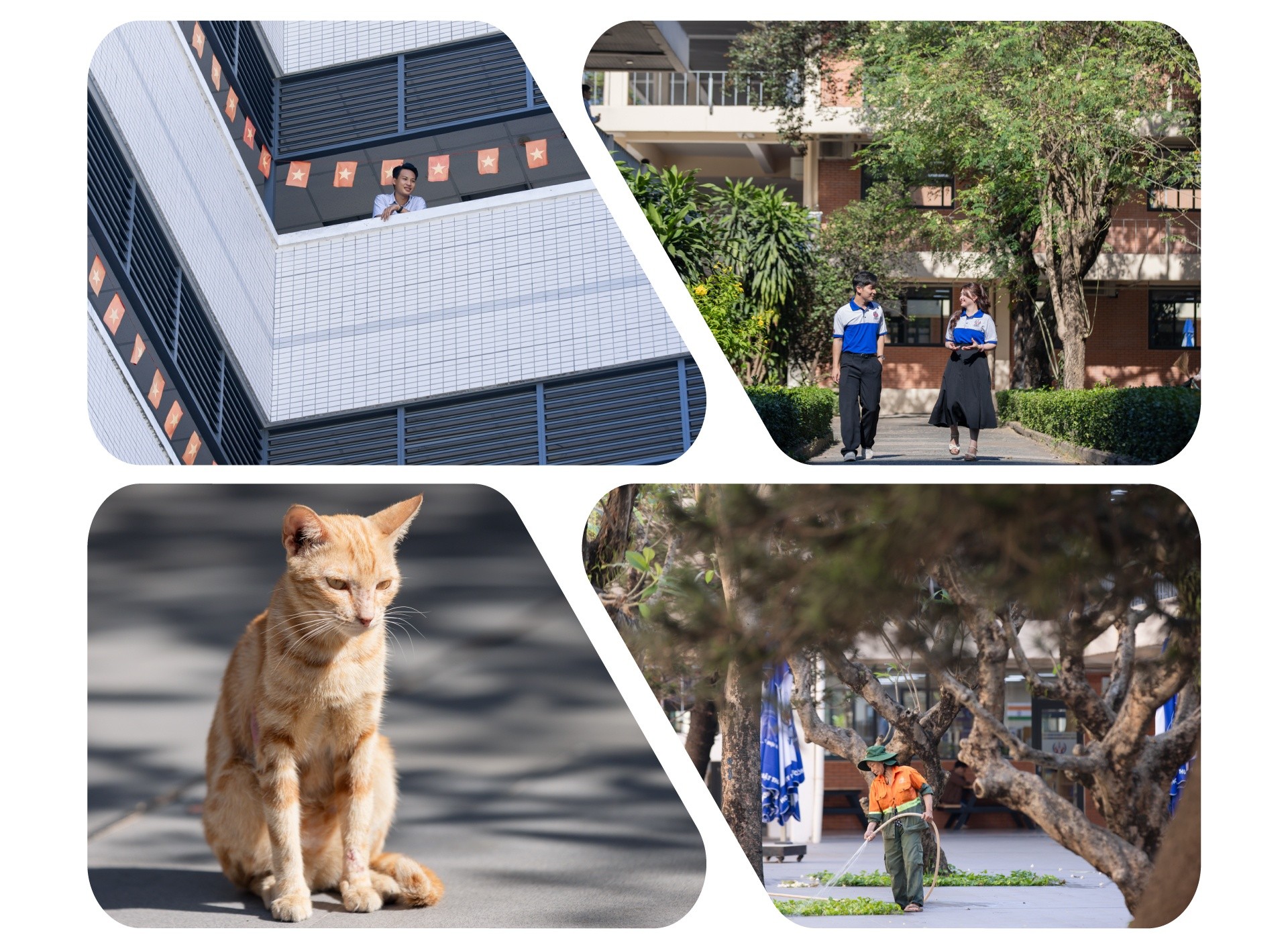
The golden April sun spills over the stone steps as Thi Cop, one of the campus cats, calmly grooms her glossy coat. Every now and then, the plump “supervisor” narrows her eyes and casts an authoritative glance at a student absorbed in a technical drawing nearby. At HCM-UTE, such charming acts of supervision are part of everyday life.
Here, machines and engine oil have not dulled students’ appreciation of beauty. Instead, the calm presence of four-legged friends such as Vang and Thi Cop has become part of the campus rhythm, an endearing touch in the dreamlike picture of a university that has just taken on its new name: Ho Chi Minh City University of Technology and Engineering.

Since its founding, the University has been recognized as one of Vietnam’s key institutions in technology and engineering, with a mission to train a high-quality STEM workforce.
Unlike its former name, which emphasized technical teacher education, the new name is more than a matter of identity. It reflects the University’s focus on technology, engineering and practical training, a direction it has pursued for many years.
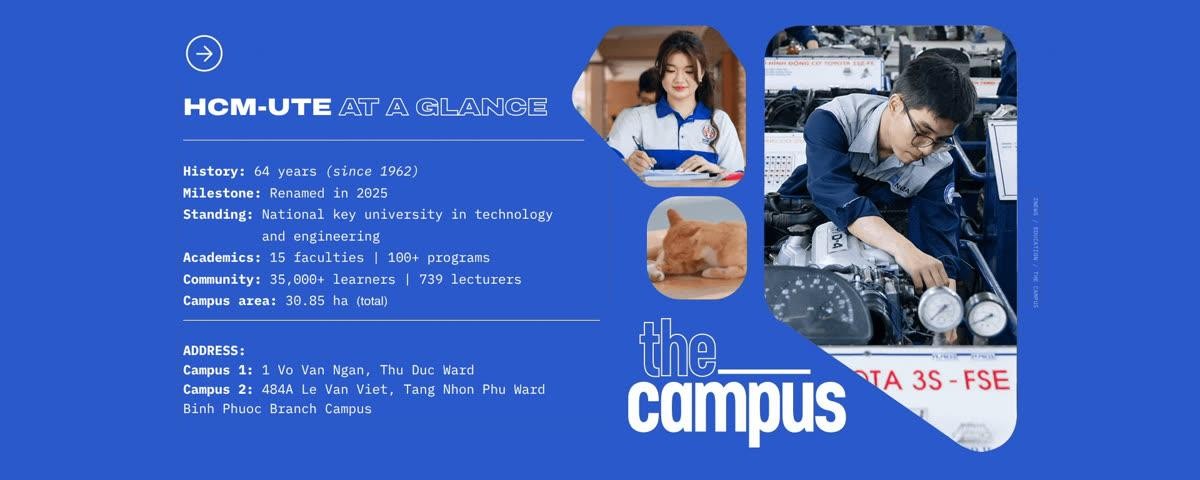
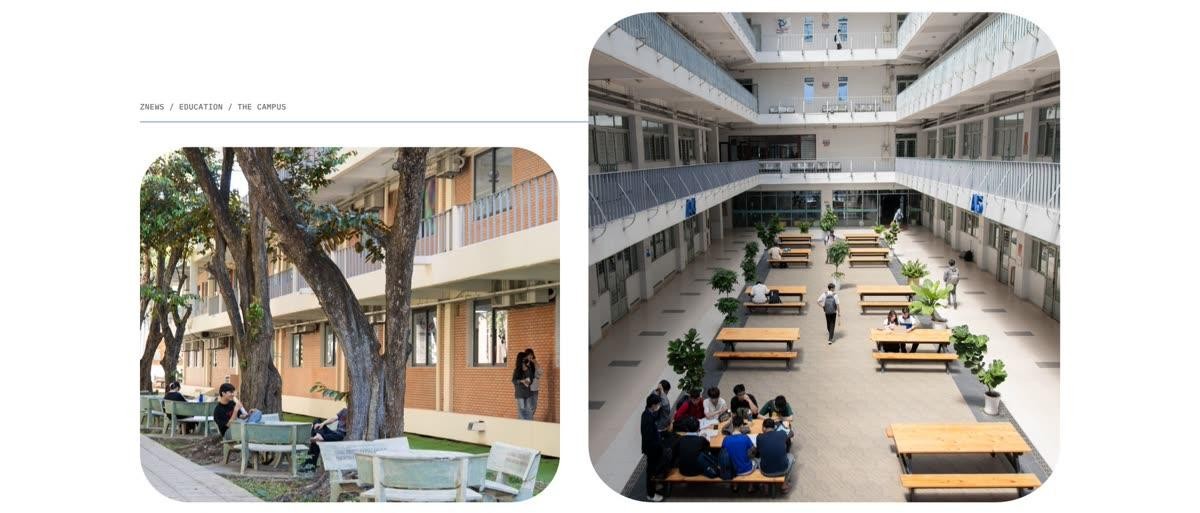
Amid the bustle of the Thu Duc intersection, the nearly 31-hectare campus opens up like another world: a university town in miniature. Long internal roads link lecture halls with workshops that still smell of machine oil. Everything is carefully laid out, creating a sense of freedom and openness.
What sets HCM-UTE apart is its breathing space. Dense greenery surrounds the high-rise buildings. Some corners feel like small parks, where sunlight barely slips through the leaves. There, groups of students can be seen absorbed in their drawings, or simply resting after class.
The modernity of the machines does not take away the sense of calm. Instead, nature adds a gentle touch that softens the dry figures of engineering work.

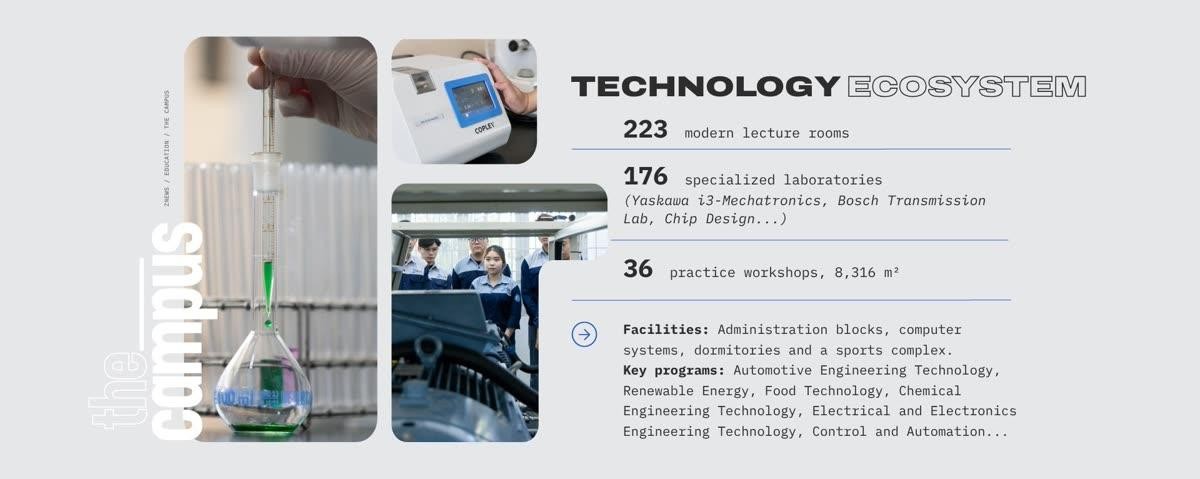
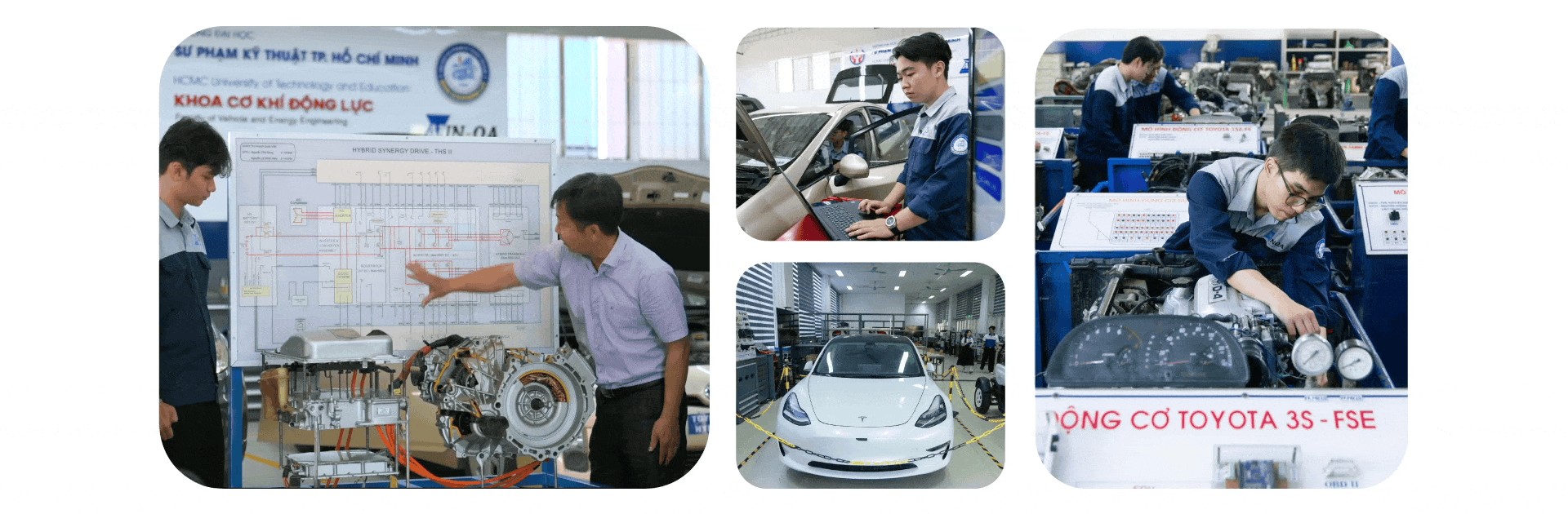
Away from the shaded paths, the roar of engines occasionally rings out from the Faculty of Energy Engineering and Transport. Here, theory does not stay on paper but comes to life in new VinFast VF 8 and VF 9 models, the result of the University’s cooperation with VinFast, which brings industry practice straight into the classroom.
Instead of old diesel engines, UTE students now work with battery management systems, electric motors and intricate electronic circuitry. Courses on smart transportation, AI and IoT are no longer unfamiliar. Everything is integrated seamlessly, helping future engineers keep pace with global green mobility trends.
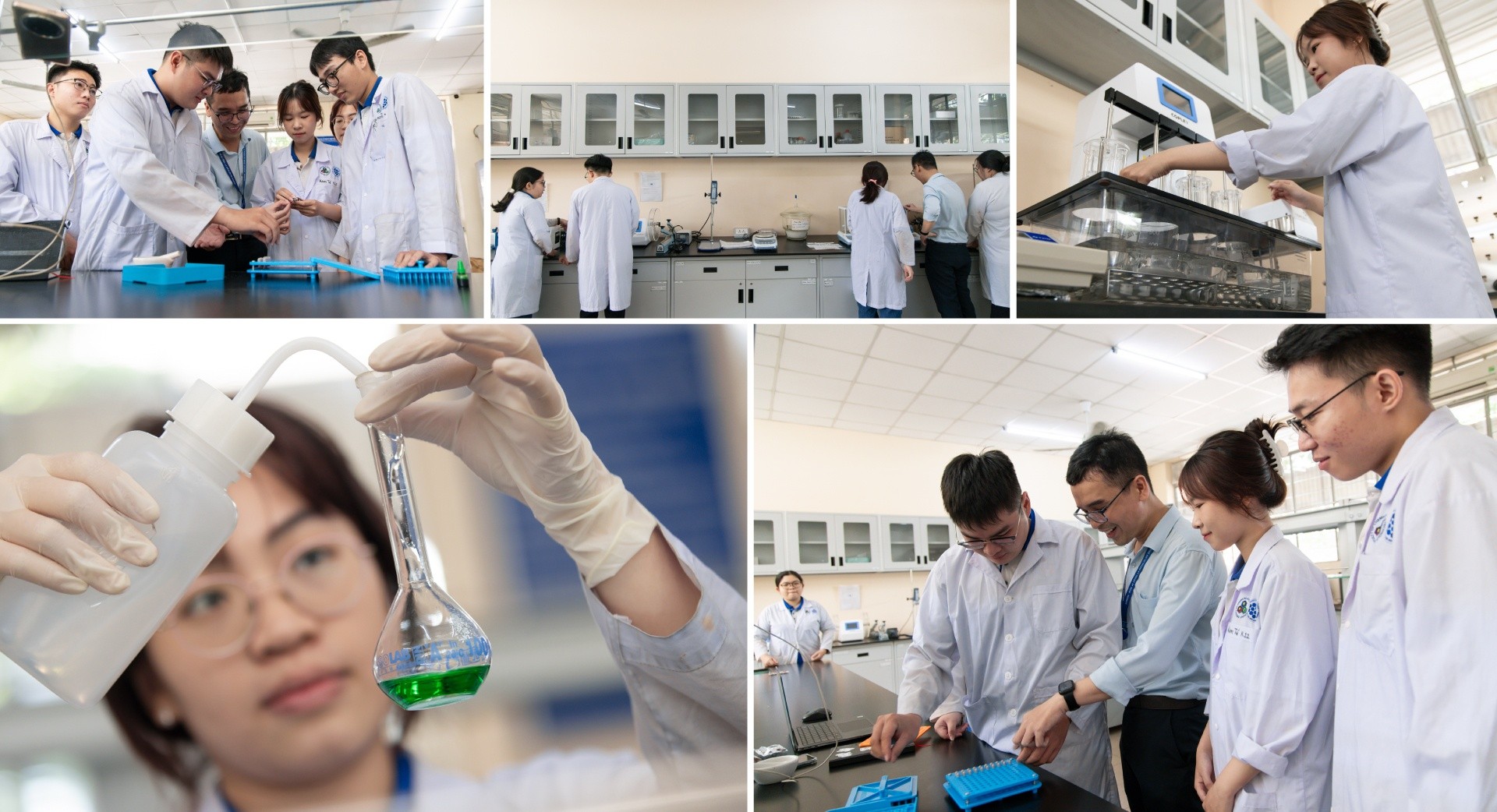
The laboratories of chemical and food technology students look very different: no engine noise, only the clinking of test tubes and the meticulous steps of pharmaceutical preparation.
Learning here does not stay on paper. It takes place on thermal analysis systems, material structure analysis equipment and modern food quality testing machines.
Students in chemical and food technology get hands-on with specialized equipment from their very first courses. From course projects to scientific research, every measurement brings them closer to real-world production, turning dry figures into tangible products.
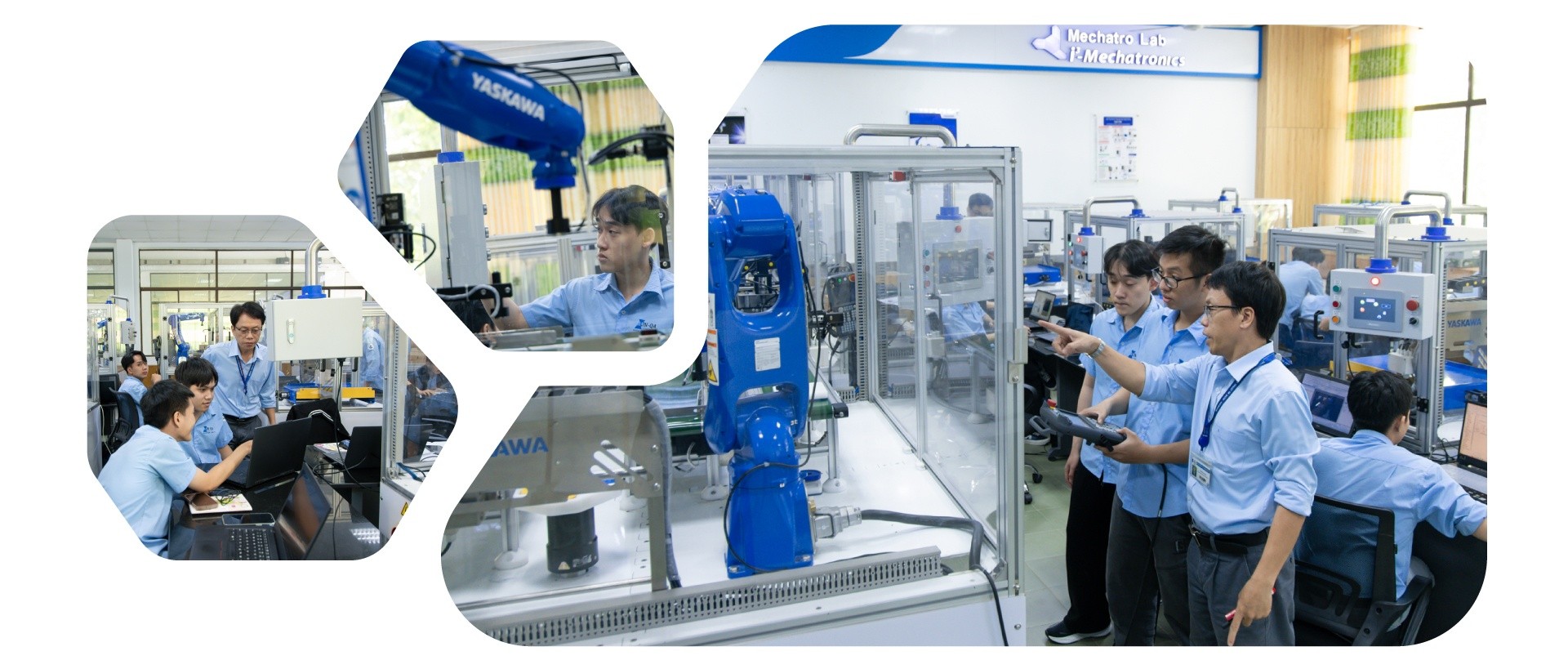
Under the laboratory lights, Yaskawa robotic arms move precisely in response to programmed commands. At the Faculty of Electrical and Electronics Engineering, the line between lecture hall and modern factory is almost erased. Motion control systems, PLCs and inverters are always ready to run. These are core technologies that connect students directly with real industrial production chains.
This is where students develop the mindset to design and operate automated production lines. They program, integrate systems and solve engineering problems, from specialized courses to their graduation projects. Beyond theory, every practice session is a hands-on experience, and from dry lines of code, the rhythm of modern manufacturing comes vividly to life.
In addition, workshops, seminars and competitions on robotics and automation are held regularly, giving students more opportunities to explore new technologies and improve their professional skills.

More than a place to store books, the library of Ho Chi Minh City University of Technology and Engineering is organized as a modern learning resource center, where students can search for materials, develop ideas and pursue research directions in depth.
For a key university in technology and engineering, the library is not only a source of materials but also a knowledge infrastructure for research and innovation. It directly supports STEM fields, from engineering and technology to applied sciences, through specialized learning resources and up-to-date research data.
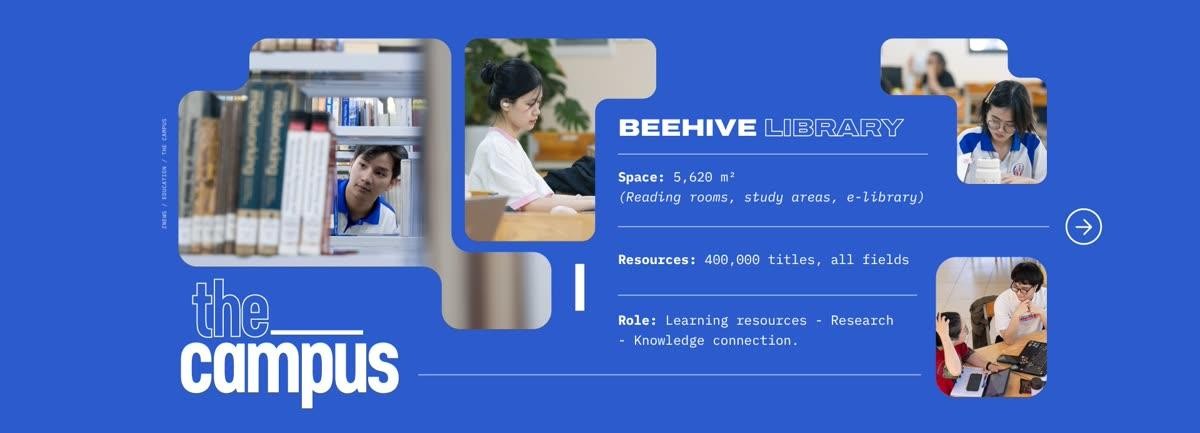
The University’s library system consists of two facilities under the Center for Learning Resources and Digital Learning, with several functional spaces such as the lending room, the Zone A reading room and the BEEHIVE reading room, flexibly meeting students’ study and research needs.
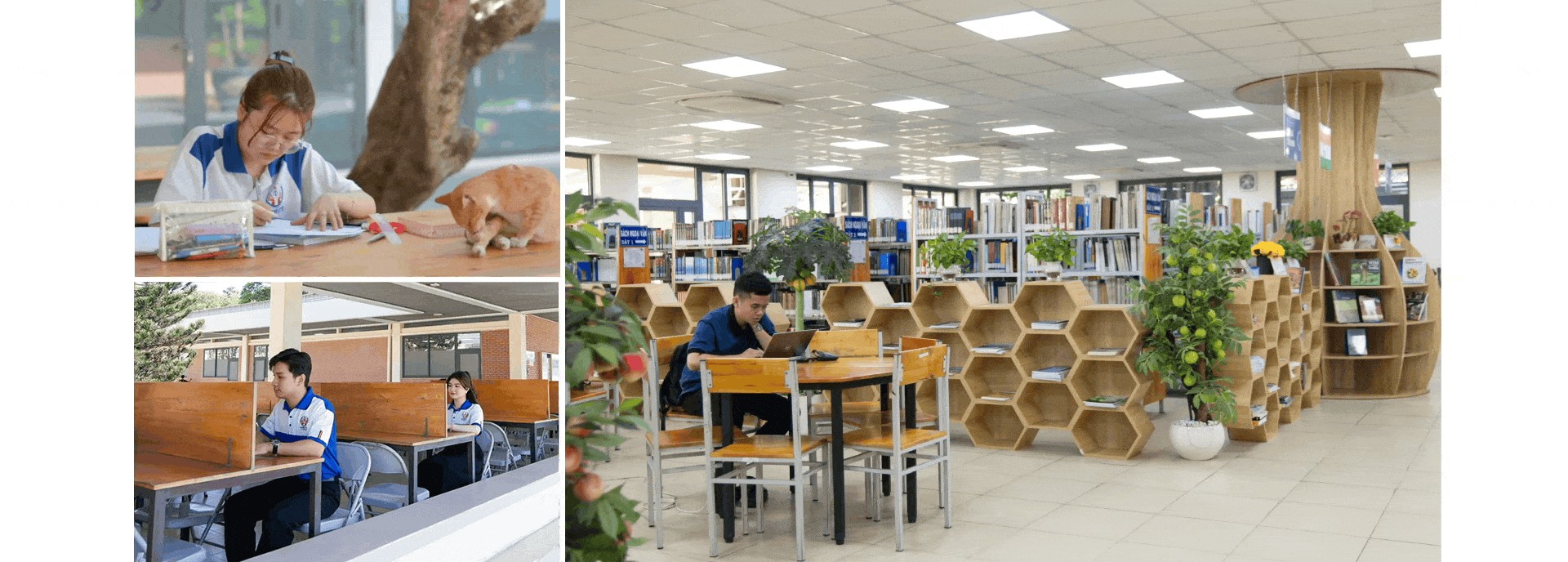
A highlight is its extensive collection of about 400,000 items, including academic publications, international scientific journals and resources for engineering research.
This is key to helping learners access new knowledge in rapidly changing fields such as automation, artificial intelligence and microchips.

Beyond the drawings and workshops, the University’s sports facilities offer a dynamic space to recharge.
Covering more than 16,000 square meters, the area is carefully planned, from a multi-purpose indoor arena to spacious outdoor courts and fields.
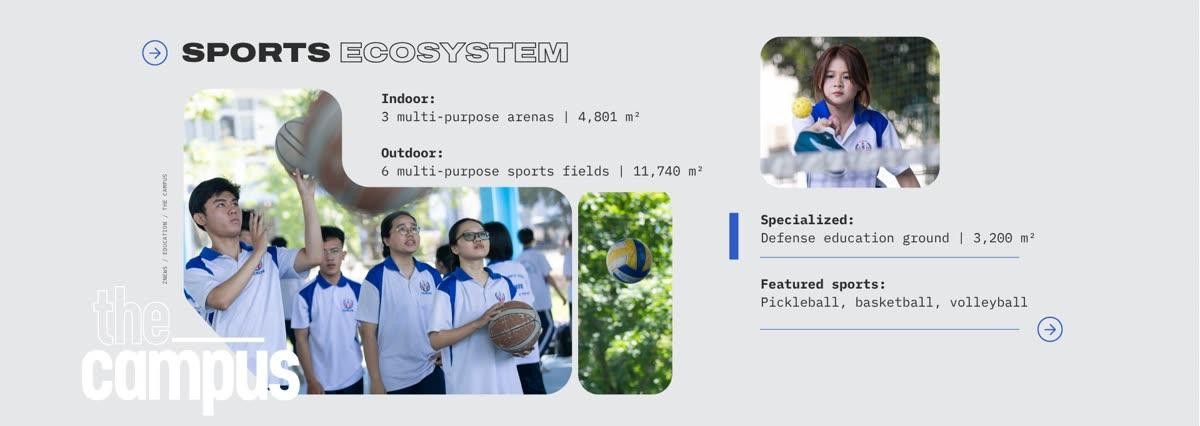
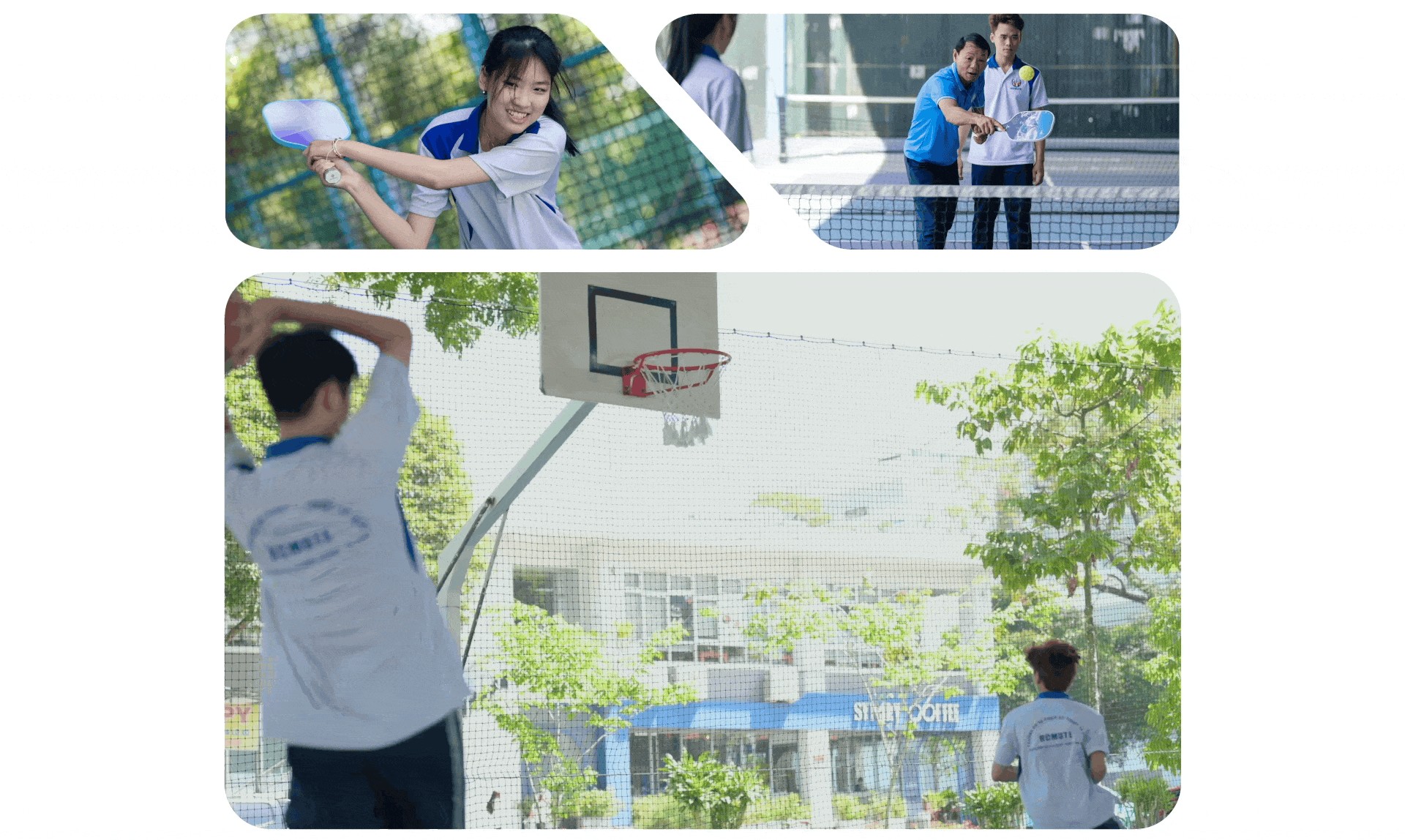
More than a place for physical training, it is a meeting point for the student community through popular sports such as pickleball, basketball and volleyball. Having these facilities on campus rounds out the learning experience and gives priority to nurturing the mental and physical well-being of future engineers.
Alongside upgrades to its existing facilities, HCM-UTE is adding new pieces to the overall picture.
Among them, the eight-story Language Development Institute building stands as a symbol of this transformation: a modern learning space where research and creativity are flexibly connected within one ecosystem.
From its change of name to substantial investment in infrastructure, HCM-UTE has set out a clear direction.
“The name change more clearly affirms our philosophy of training people with practical skills who can adapt to the rapid development of science and technology. It is also in line with the need to develop a highly skilled workforce for Ho Chi Minh City and the southern region,” Dr. Quach Thanh Hai, Vice President of the University, told Tri Thuc - Znews.
Original article (in Vietnamese)
Không gian đẹp ngỡ ngàng bên trong ĐH đào tạo kỹ sư hàng đầu phía Nam
Tri Thuc - Znews, znews.vn
Read the original article on Znews ↗
This English translation is provided for international readers. The original article and photos are the property of Tri Thuc - Znews.
Source: Tri Thuc - Znews
About the University’s Name Change: On December 26, 2025, the Prime Minister of Vietnam issued Decision No. 2809/QĐ-TTg, officially renaming Ho Chi Minh City University of Technology and Education to Ho Chi Minh City University of Technology and Engineering (HCM-UTE). The new name reflects the University’s multidisciplinary development strategy, its strengths in technology and engineering, and its current institutional stature. Before 2007, the University was Vietnam’s leading institution for technical teacher education. Following changes to the national higher education program classification system in 2007, the University expanded its focus to technology, engineering, and related disciplines. The name change aligns with Vietnam’s Higher Education Network Development Plan for 2021-2030 with a vision toward 2050, addresses the demand for high-quality human resources in the digital transformation era, and reaffirms HCM-UTE’s role as a national key university in technology and engineering. |
|---|