
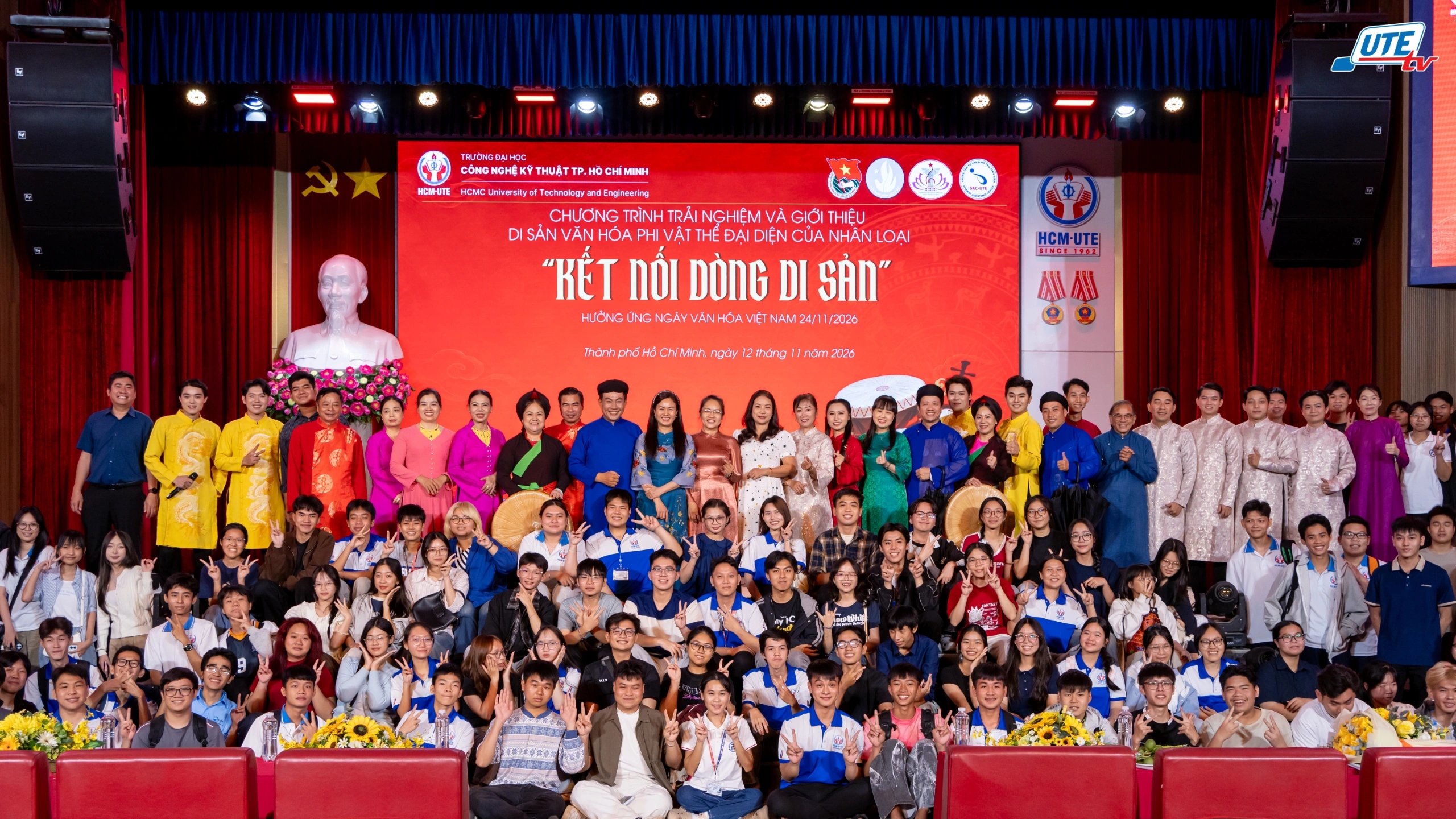
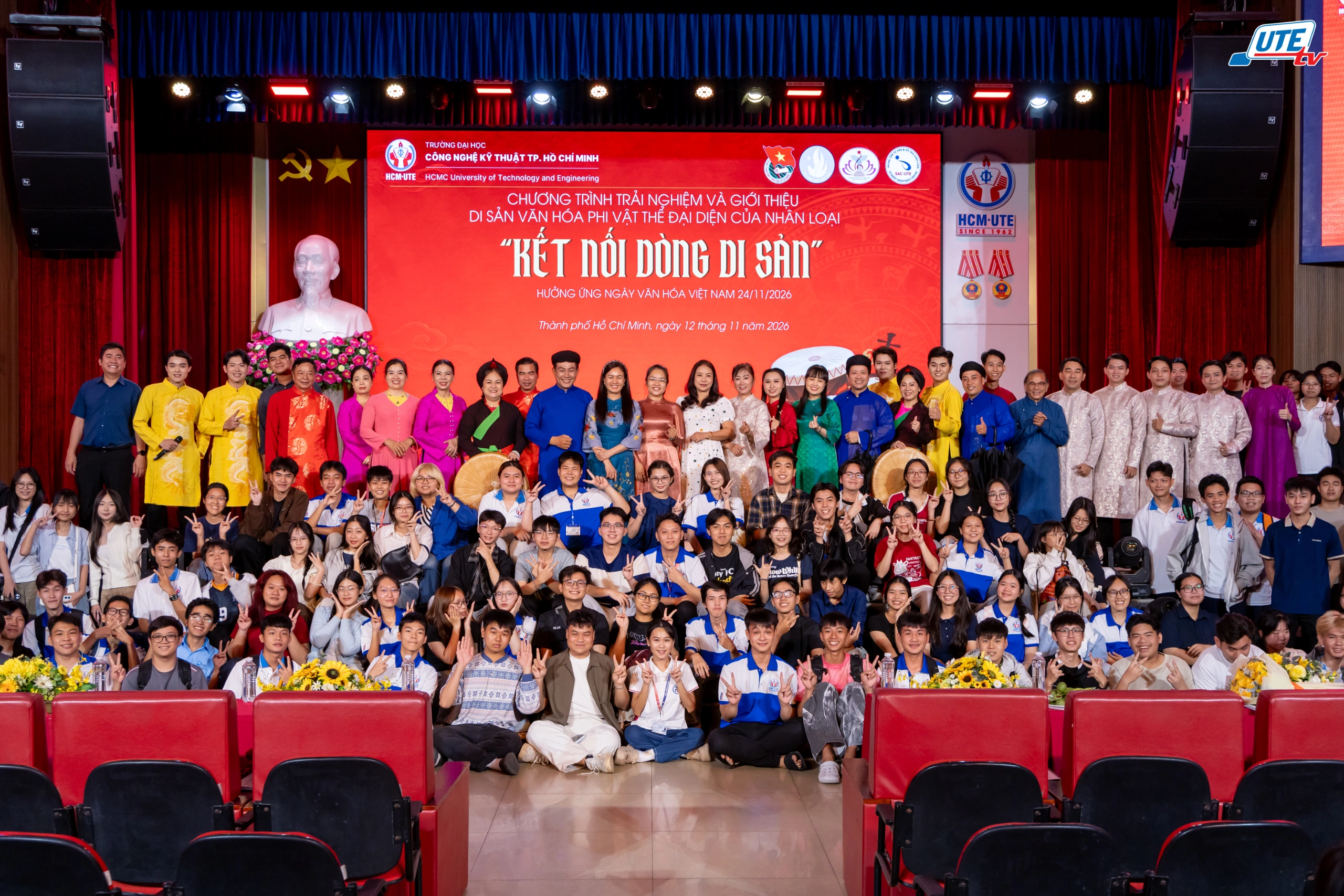
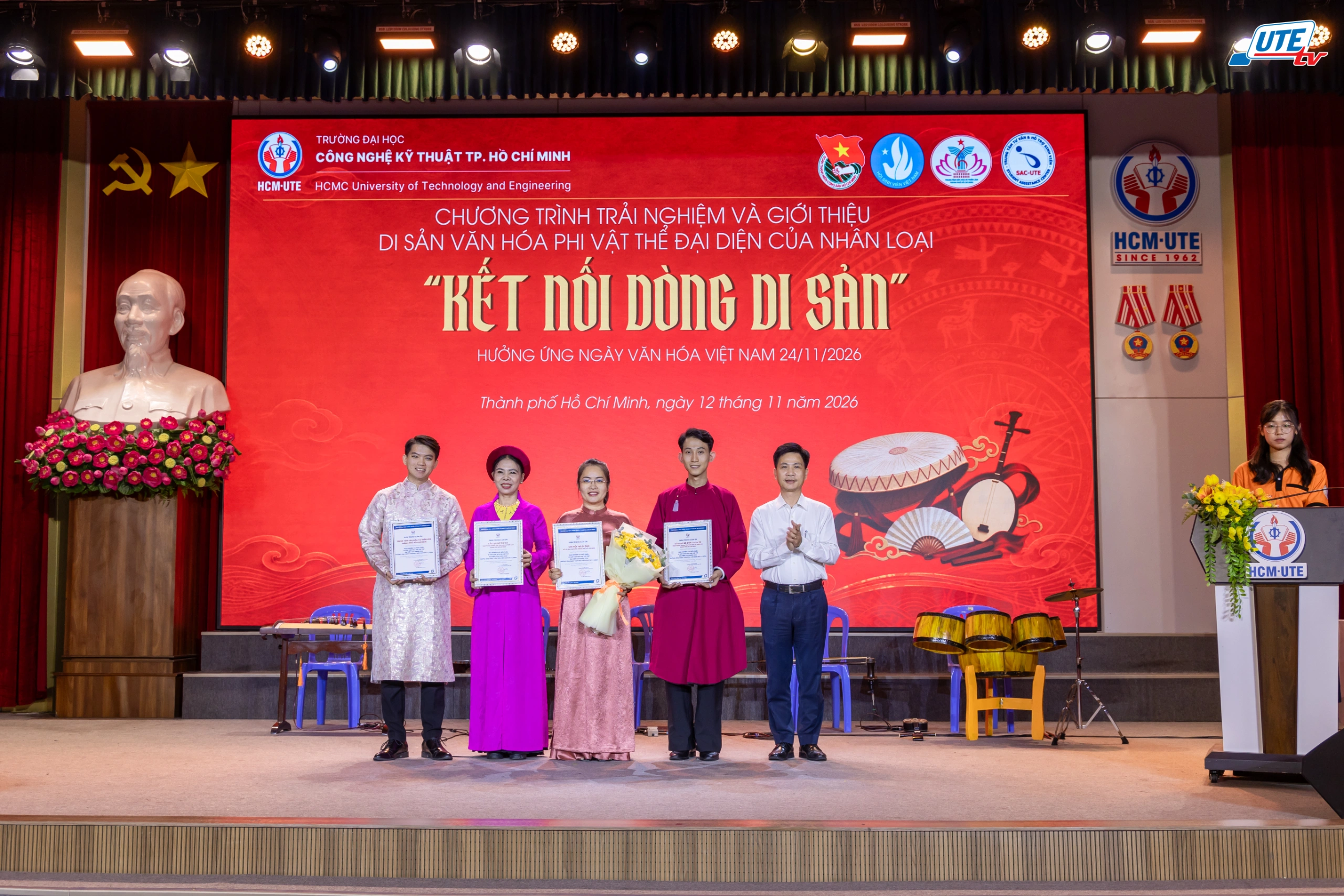
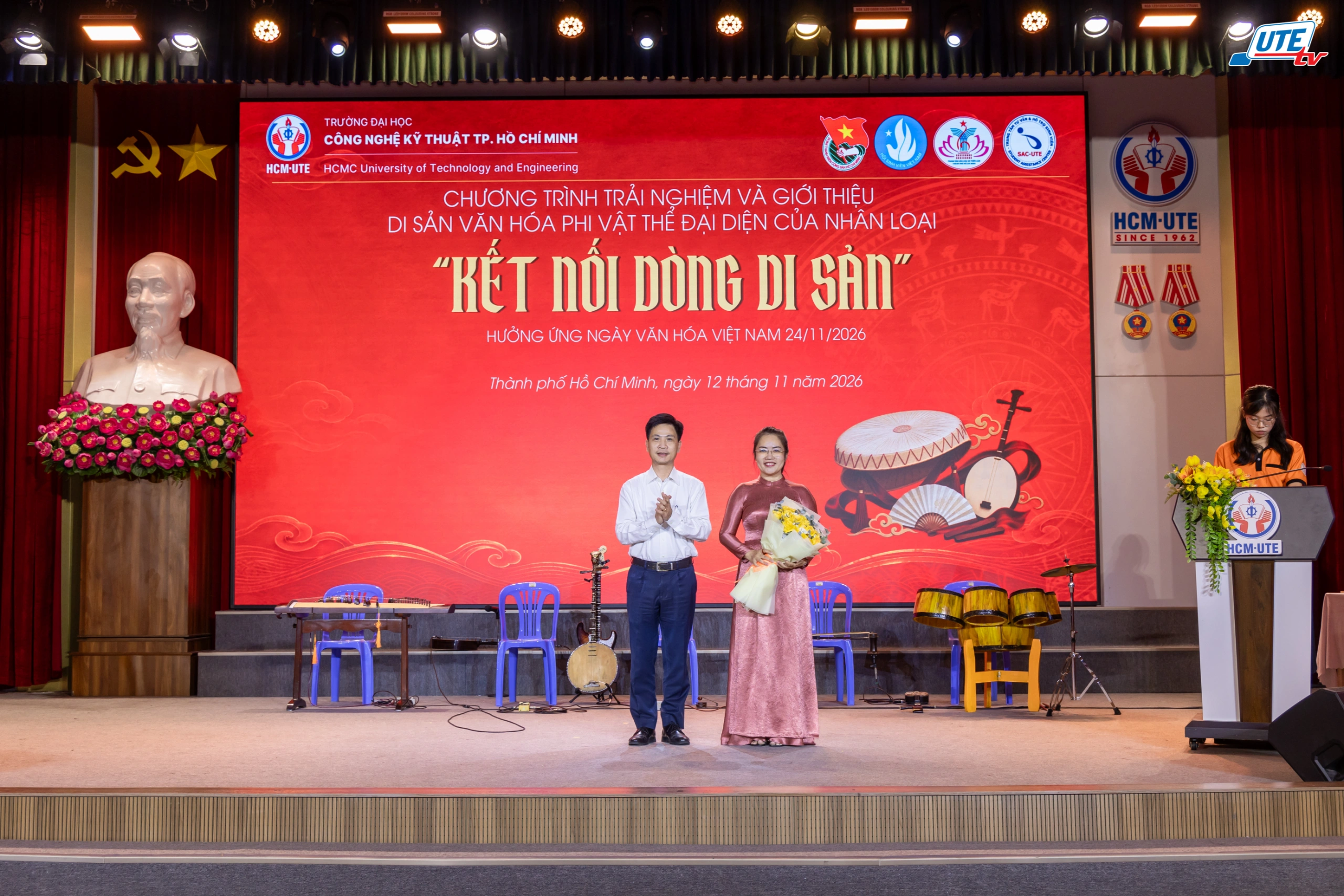
On November 12, 2026, Ho Chi Minh City University of Technology and Engineering (HCM-UTE, formerly Ho Chi Minh City University of Technology and Education), in collaboration with the Ho Chi Minh City Center for Culture and Exhibition, held an arts and cultural experience program themed “Kết nối dòng di sản” (Connecting the Flow of Heritage) in the lead-up to Vietnam Culture Day on November 24, 2026. The program gave students an opportunity to discover and enjoy distinctive forms of Vietnam’s intangible cultural heritage through traditional art performances and a Vietnamese tea experience.
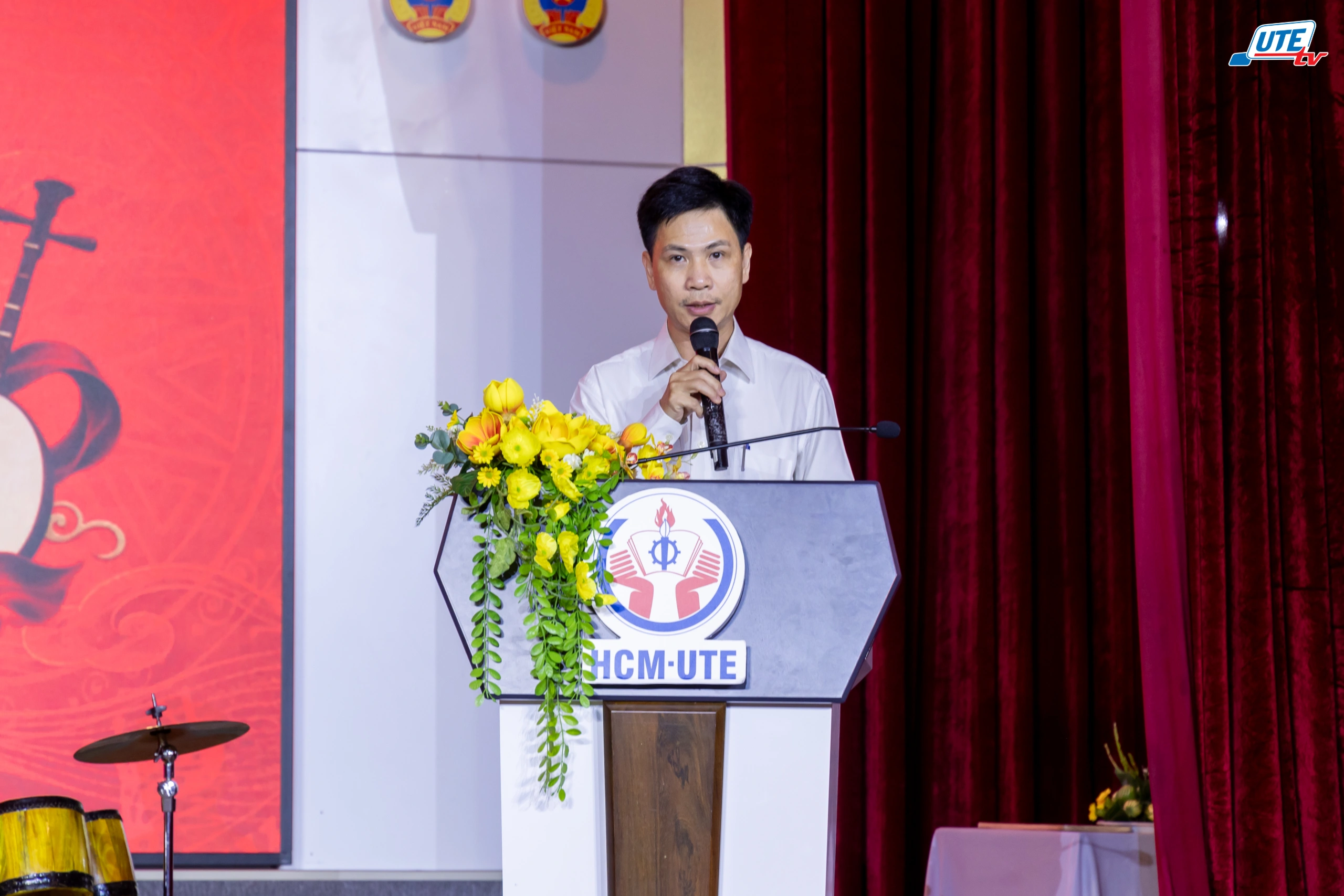
Attending the program on behalf of HCM-UTE were Assoc. Prof. Dr. Chau Dinh Thanh, Member of the Standing Committee of the University Party Committee and Vice President of the University; Le Phan Nhat Hang, M.A., Deputy Director of the Office of Student Affairs; and representatives of the University’s Youth Union and Student Association. Representing the Ho Chi Minh City Center for Culture and Exhibition were Ms. Nguyen Thi Hoai Phuong, Deputy Director of the Center, and Ms. Pham Thuy Mong Kieu, Deputy Head of the Culture and Arts Division, together with artisans, members of the Poetry Club and the Đờn ca tài tử (Southern amateur music) Club, and a large number of HCM-UTE students.
Speaking at the program, Assoc. Prof. Dr. Chau Dinh Thanh emphasized the importance of preserving and promoting traditional cultural values in modern life, and referred to Politburo Resolution No. 80-NQ/TW, dated January 7, 2026, on the development of Vietnamese culture. He noted that cultural education and building a university culture deserve attention in higher education, helping to shape young people’s awareness of, love for and responsibility toward national cultural values. Through cooperation with cultural institutions, the University continues to create opportunities for students to learn about and take part in activities that preserve and promote heritage.
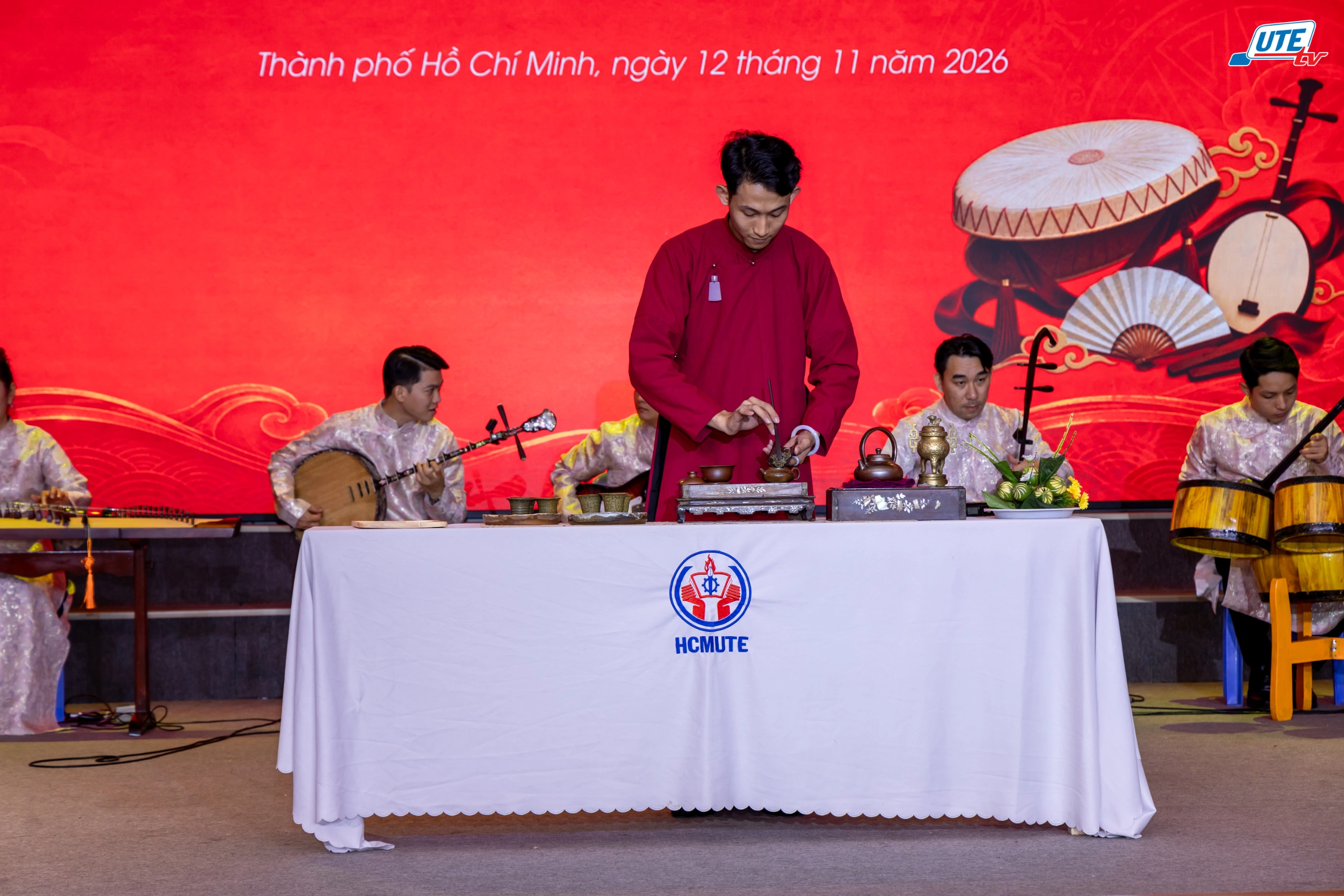
A highlight of the program was a Vietnamese tea-brewing demonstration and exchange led by artisan Le Chanh Can of the Heritage Tea Branch, Ho Chi Minh City Cultural Heritage Association. Students observed the tea-brewing process, explored the character and distinctive features of Vietnamese tea culture, and tasted tea in a setting rich in tradition. The activity introduced a long-standing cultural practice that has been part of Vietnamese life and customs for generations.
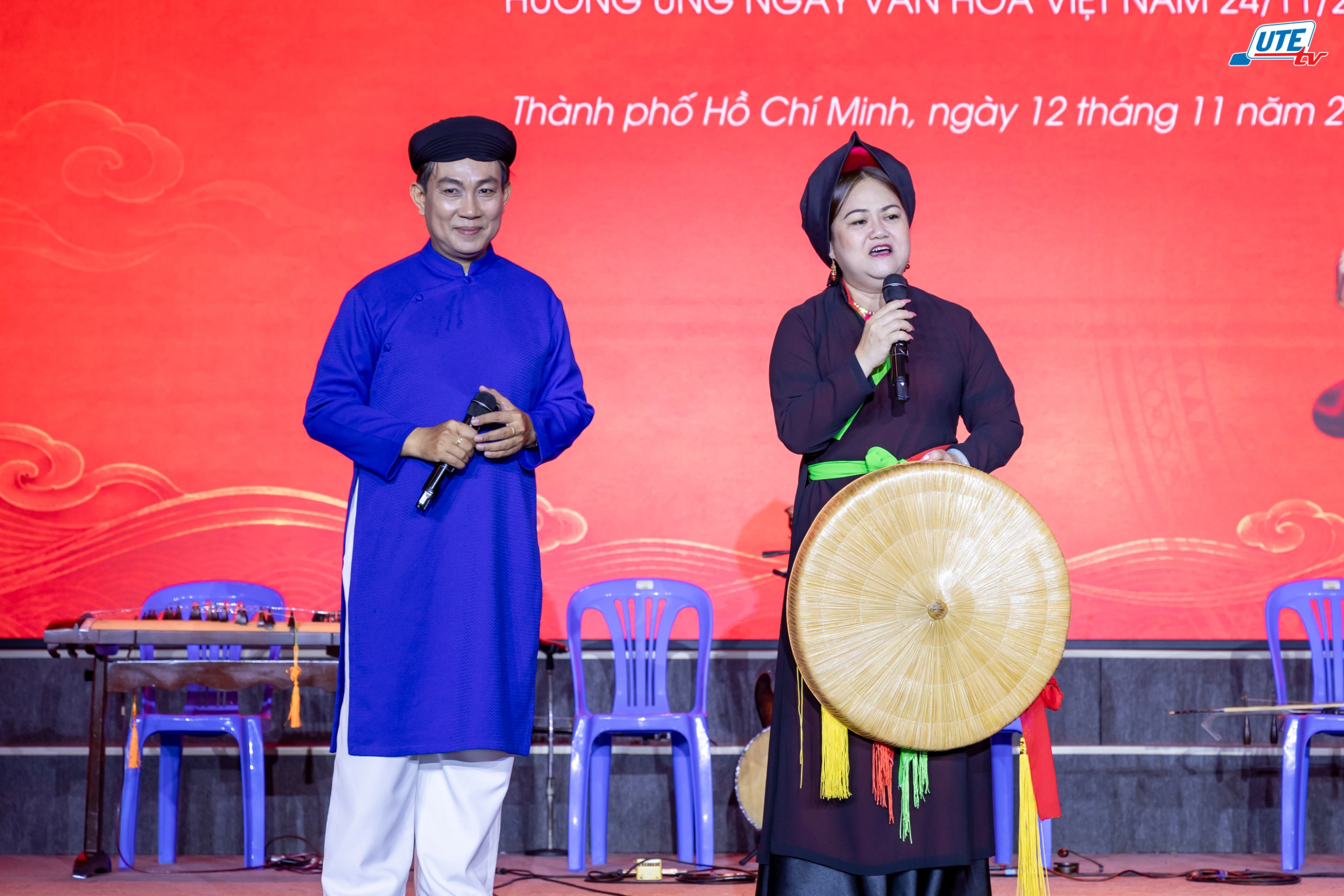
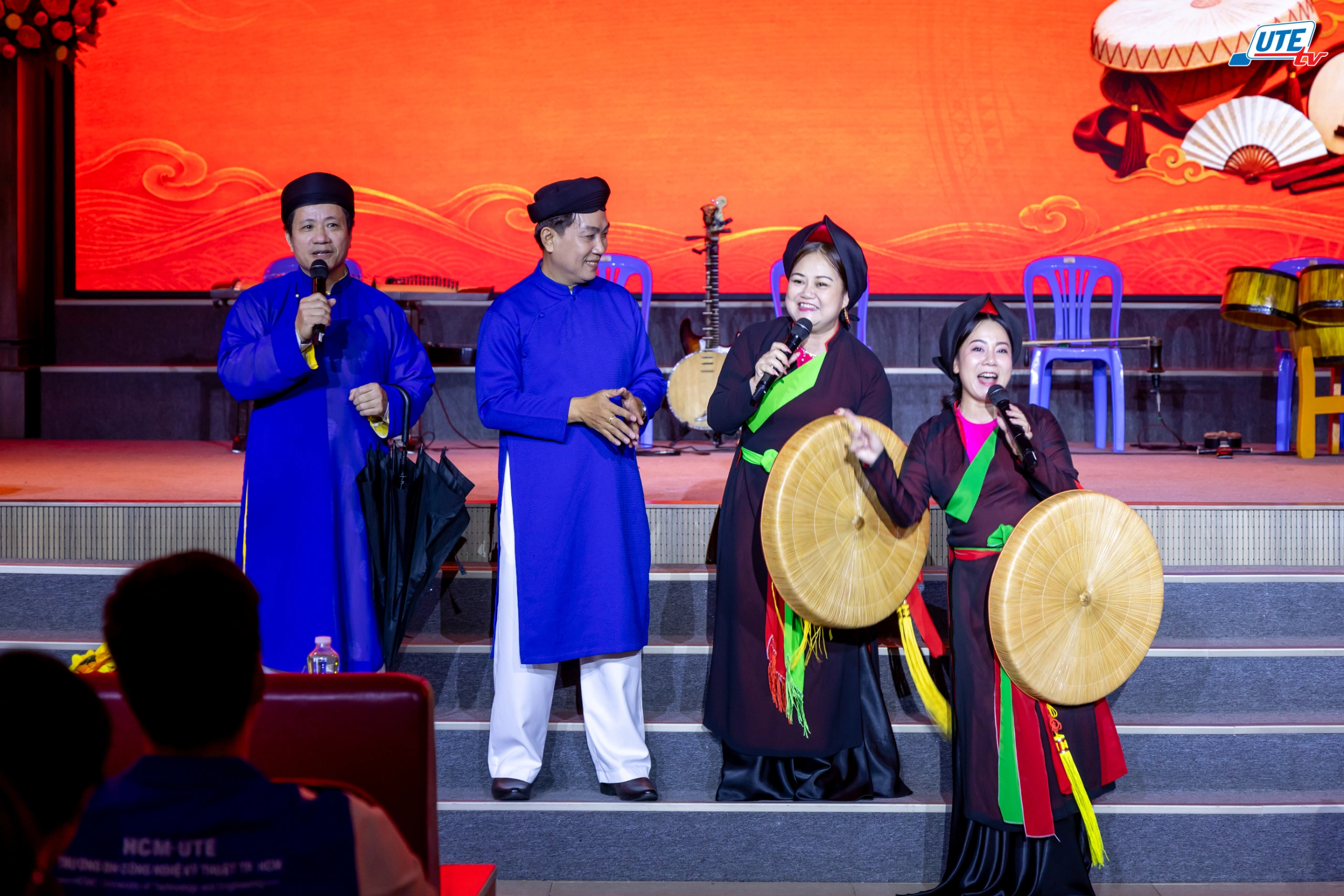
The program continued with performances introducing distinctive forms of heritage from the three regions of Vietnam. For Quan họ Bắc Ninh (the love-duet folk singing of Bac Ninh), artists Trong Tien, Le Thuy, Hong Man and others performed familiar melodies such as “Ba quan mời trầu” (An Invitation to Betel), “Hoa thơm bướm lượn” (Fragrant Flowers, Fluttering Butterflies) and “Cây trúc xinh” (The Lovely Bamboo), recreating the charm of the courtship singing tradition of the Kinh Bac region.
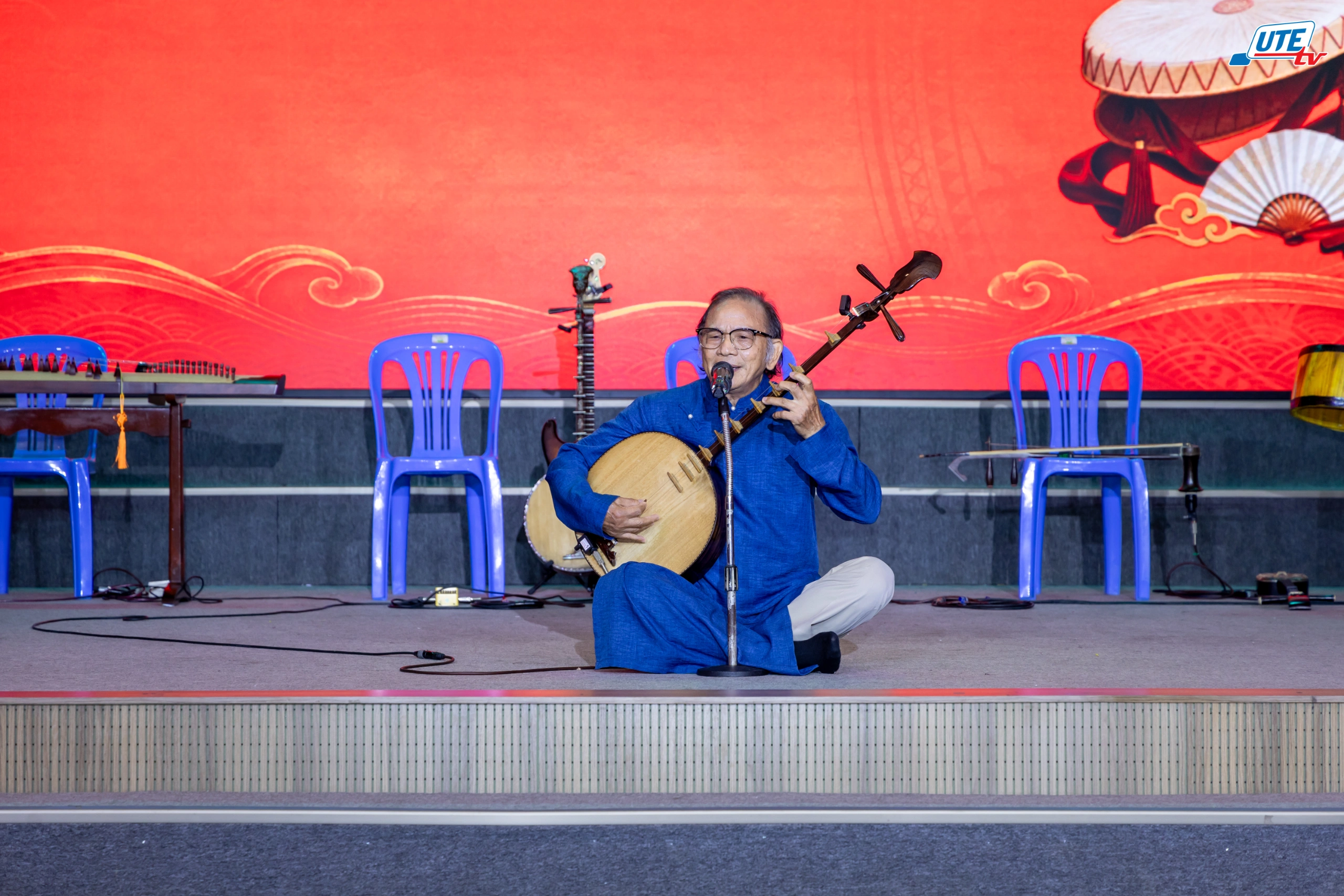
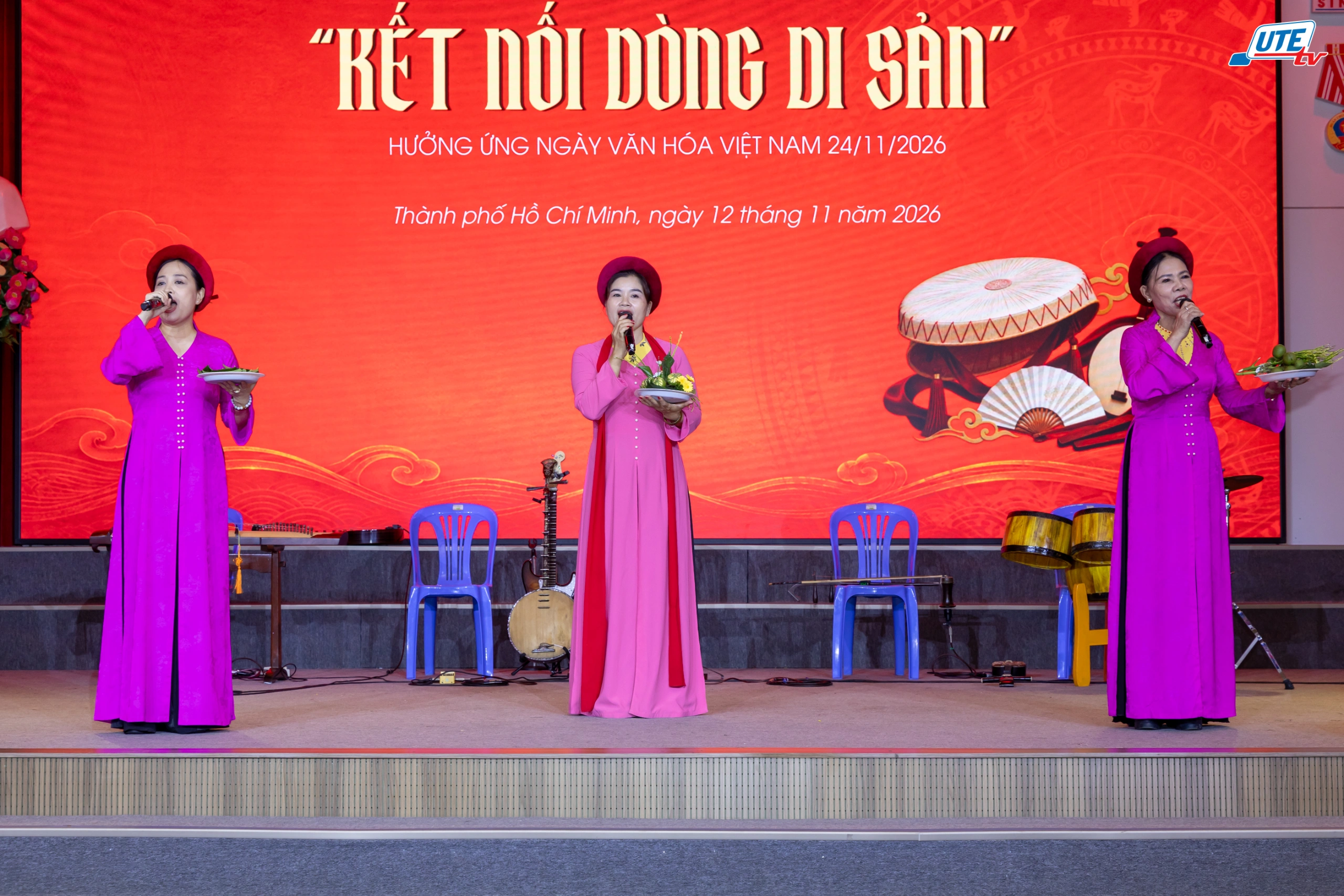
Hát Chầu văn (ritual singing) was introduced through a performance by Meritorious Artisan Vu Huy Du, accompanied by the distinctive sound of the đàn nguyệt (moon lute). Meanwhile, Ví, Giặm Nghệ Tĩnh (the Vi and Giam folk songs of Nghe Tinh) was presented through the melodies “Hò đi đường” (Song of the Road) and “Mời trầu” (Offering Betel), performed by Folk Artisan Ha Huong Lai, People’s Artisan Duc Tuong and People’s Artisan Thanh Tu, bringing the simple yet heartfelt tunes of the Nghe Tinh region.
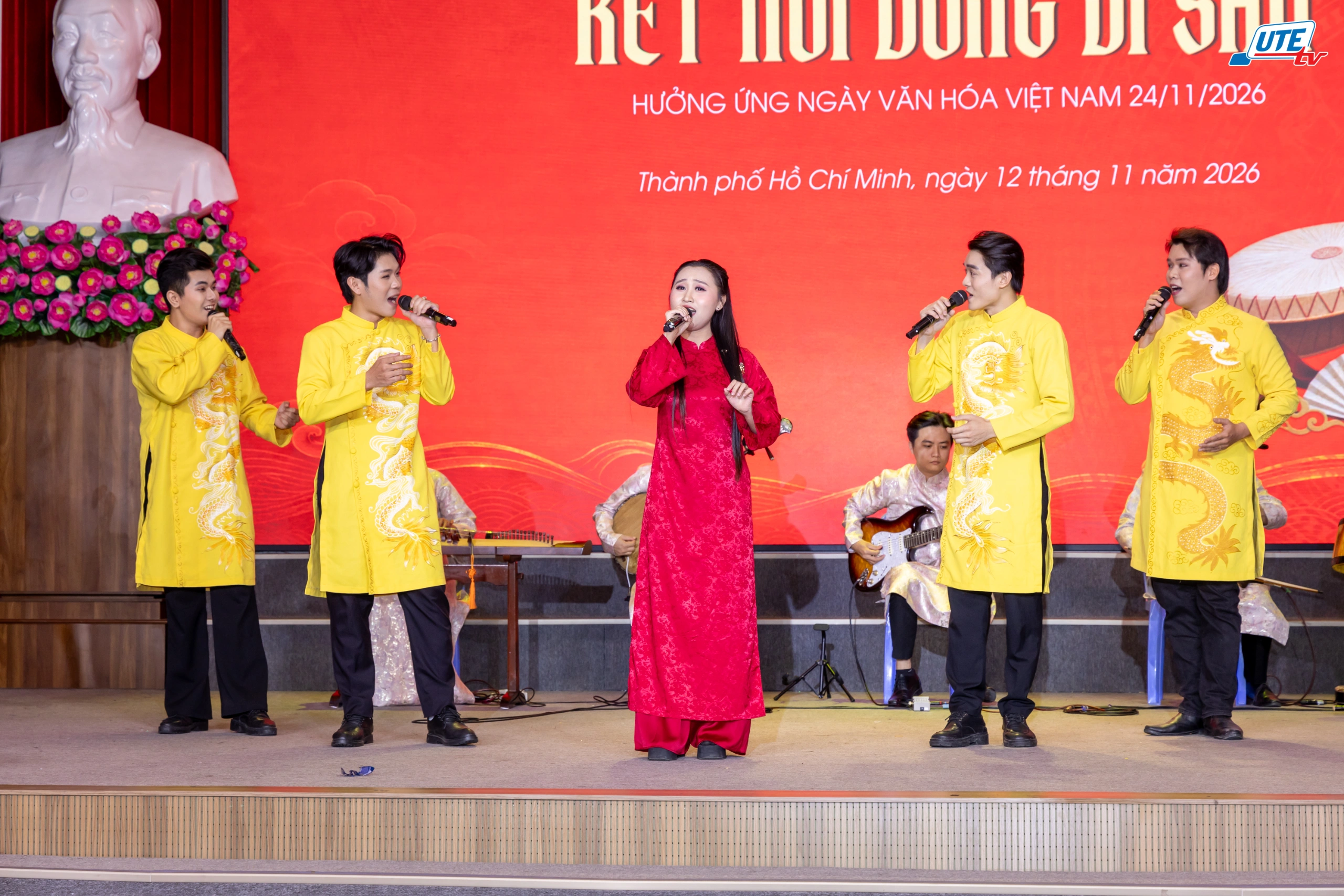
Representing the traditional arts of Southern Vietnam, Đờn ca tài tử (Southern amateur music) was introduced through the ensemble piece “Lưu – Bình – Kim”, the vọng cổ (“longing for the past”) piece “Dạ cổ hoài lang” (Night Drumbeats Stir Longing for an Absent Husband) performed by Meritorious Artisan Thanh Mai, and “Khúc hát tri ân” (Song of Gratitude) by the Cội xưa (Old Roots) group. Through each performance, students experienced the richness of the melodies, instruments and performance styles of traditional art forms.
Through the “Kết nối dòng di sản” program, cultural values passed down through generations were brought closer to students through exchanges, performances and hands-on experiences. The program not only allowed students to enjoy traditional arts but also helped raise awareness of the importance of preserving and promoting national cultural heritage, while fostering campus culture and respectful conduct among students.
Highlights from the performances:
About the University’s Name Change: On December 26, 2025, the Prime Minister of Vietnam issued Decision No. 2809/QĐ-TTg, officially renaming Ho Chi Minh City University of Technology and Education to Ho Chi Minh City University of Technology and Engineering (HCM-UTE). The new name reflects the University’s multidisciplinary development strategy, its strengths in technology and engineering, and its current institutional stature. Before 2007, the University was Vietnam’s leading institution for technical teacher education. Following changes to the national higher education program classification system in 2007, the University expanded its focus to technology, engineering, and related disciplines. The name change aligns with Vietnam’s Higher Education Network Development Plan for 2021-2030 with a vision toward 2050, addresses the demand for high-quality human resources in the digital transformation era, and reaffirms HCM-UTE’s role as a national key university in technology and engineering. |
|---|