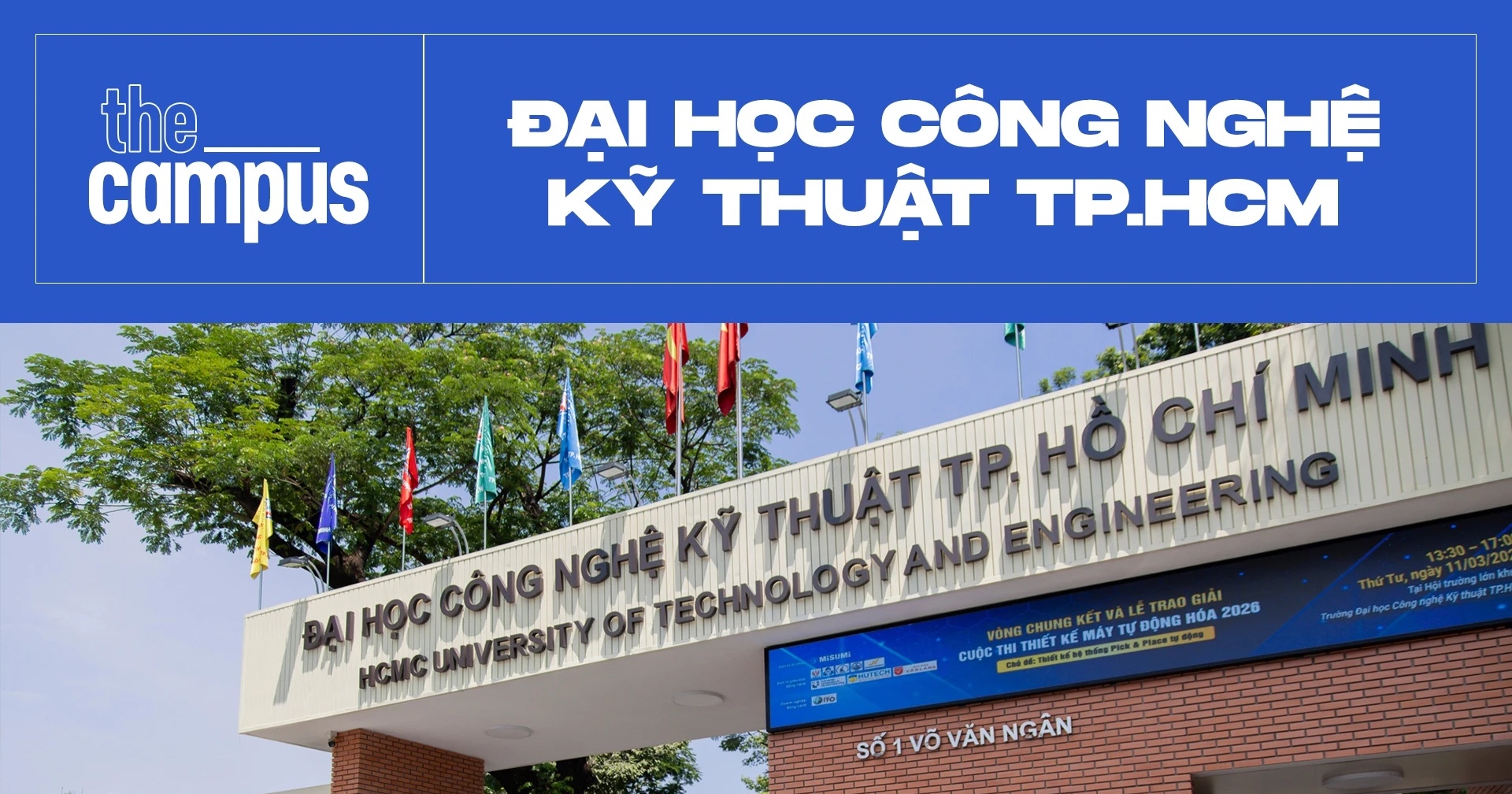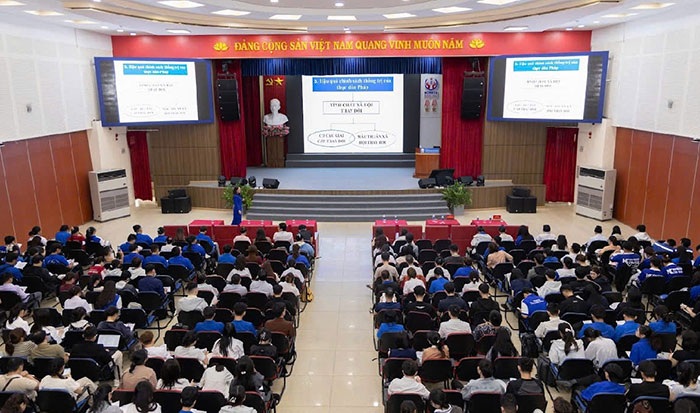

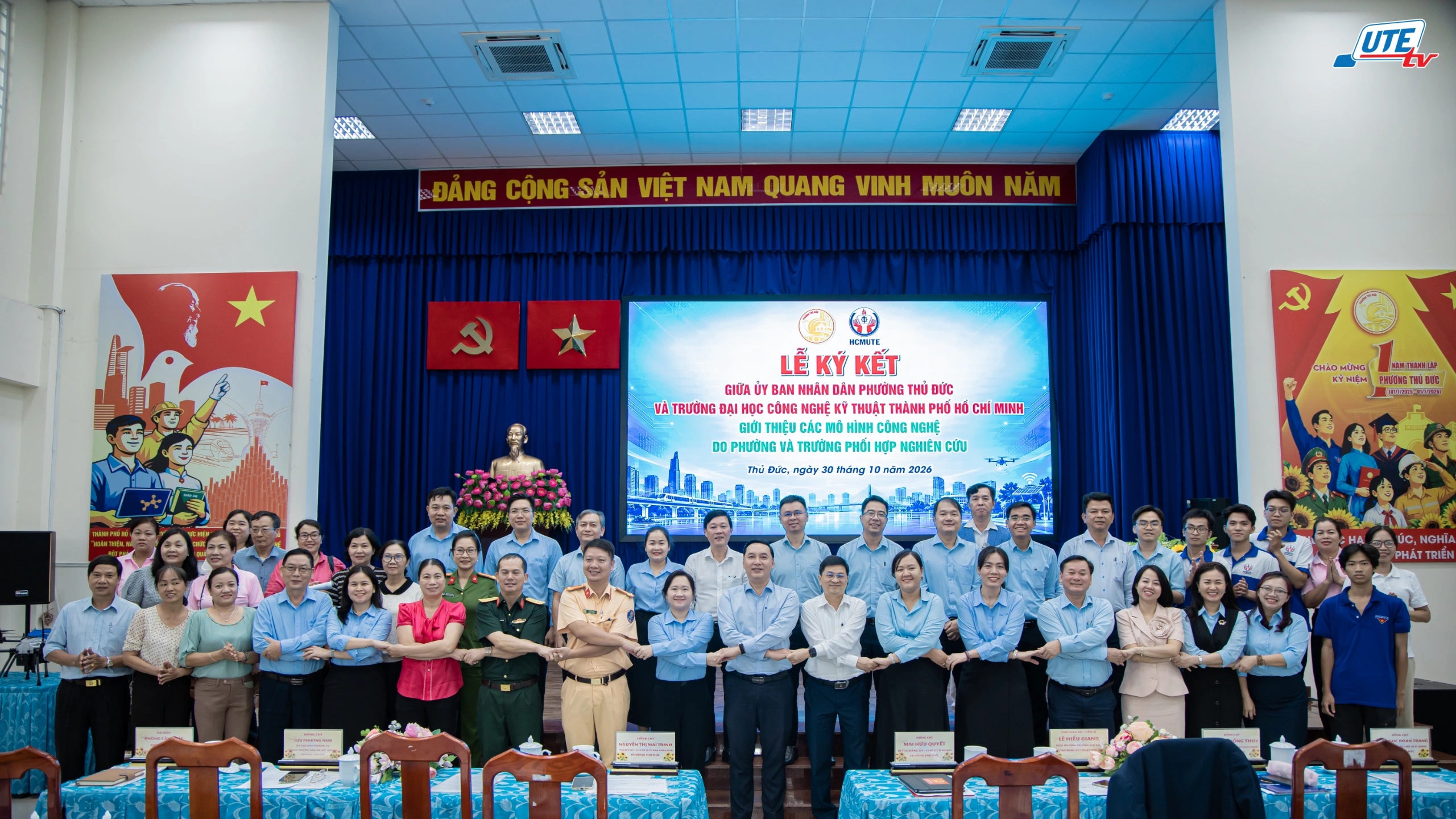
On the afternoon of October 30, 2026, Ho Chi Minh City University of Technology and Engineering (HCM-UTE, formerly Ho Chi Minh City University of Technology and Education) and the People’s Committee of Thu Duc Ward held a signing ceremony for a comprehensive cooperation agreement for the 2026–2030 period. The partnership aims to harness the University’s resources in science and technology, research and training to address practical needs in the ward, contributing to digital transformation and the development of a civilized, modern urban area.
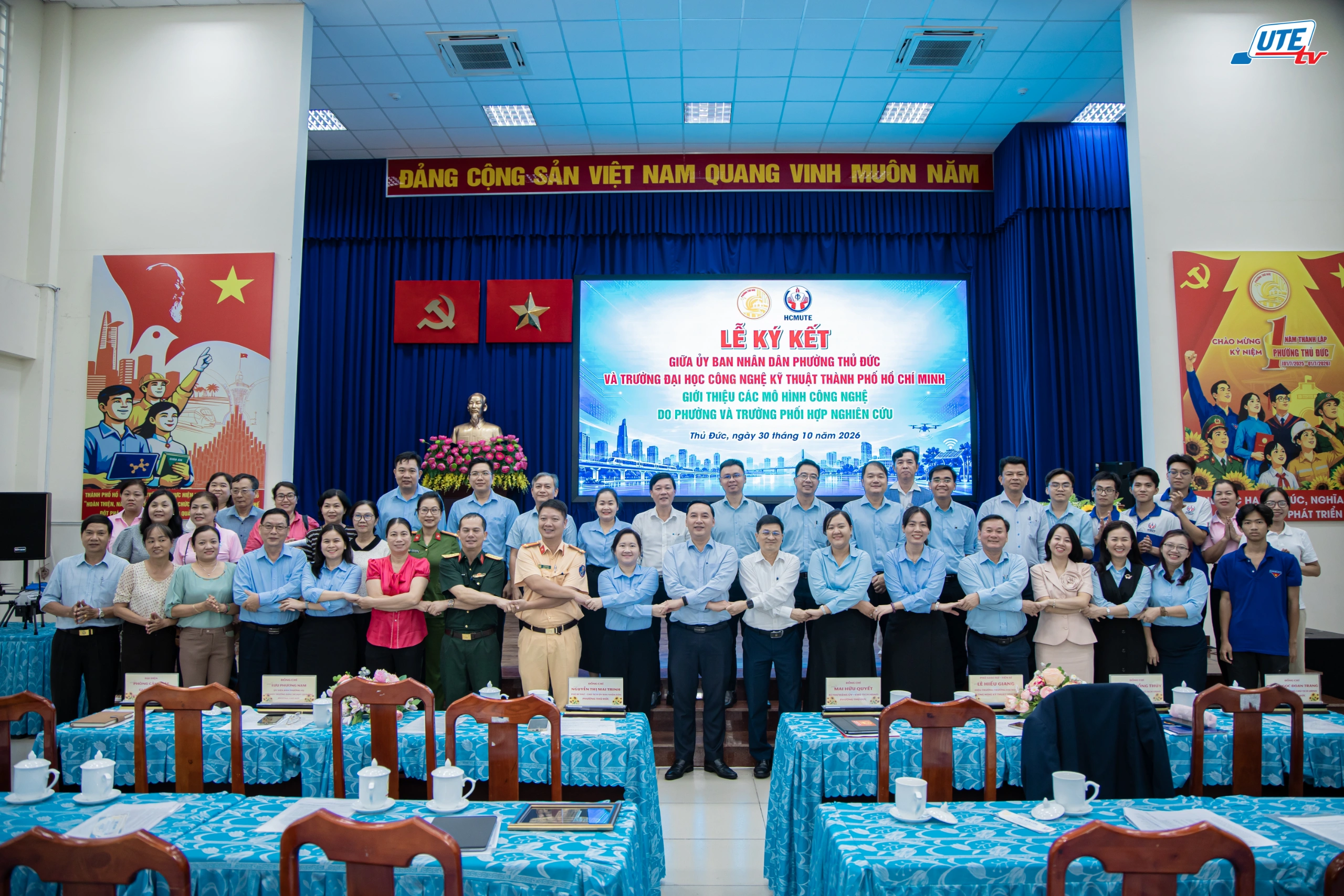
Attending the ceremony on behalf of Thu Duc Ward were Mr. Mai Huu Quyet, Secretary of the Ward Party Committee and Chair of the Ward People’s Council; Ms. Nguyen Thi Mai Trinh, Deputy Secretary of the Ward Party Committee and Chair of the Ward People’s Committee; Ms. Tran Thi Hong Thuy and Ms. Phan Ngoc Doan Trang, members of the Ward Party Committee and Vice Chairs of the Ward People’s Committee. Also in attendance were Mr. Le Dinh Son, Deputy Head of the Rach Chiec Traffic Police Team under the Traffic Police Division of Ho Chi Minh City Police, along with representatives of agencies and units and of the ward’s 46 residential quarters.
Representing HCM-UTE were Assoc. Prof. Dr. Le Hieu Giang, Secretary of the Party Committee and President of the University; Assoc. Prof. Dr. Truong Nguyen Luan Vu, Member of the Standing Committee of the University Party Committee, Dean of the Faculty of Mechanical Engineering and a deputy of the Thu Duc Ward People’s Council; and leaders of the University’s units and research groups.
Five Areas of Cooperation for 2026–2030
Witnessed by the leaders of both sides and the guests in attendance, Assoc. Prof. Dr. Le Hieu Giang, Secretary of the Party Committee and President of HCM-UTE, and Ms. Nguyen Thi Mai Trinh, Deputy Secretary of the Ward Party Committee and Chair of the Thu Duc Ward People’s Committee, signed the Memorandum of Understanding (MOU) on cooperation for the 2026–2030 period.
Under the agreement, the cooperation program focuses on five key areas:
-
First, training, capacity building and human resource development, including improving knowledge and skills in science, technology, innovation and digital transformation for officials, civil servants and the community.
-
Second, research, application and technology transfer, including joint testing and refinement of products and solutions for urban management, production, business and residents’ daily lives.
-
Third, community service activities that help residents access technology and digital services, along with sports exchanges and joint environmental protection efforts.
-
Fourth, coordination on national defense, security, public order and school safety, as well as guidance and support with administrative, residence, investment, construction and land procedures within each side’s functions and authority.
-
Fifth, mutual support with facilities, vehicles, equipment and other resources for the activities of both sides, as agreed.
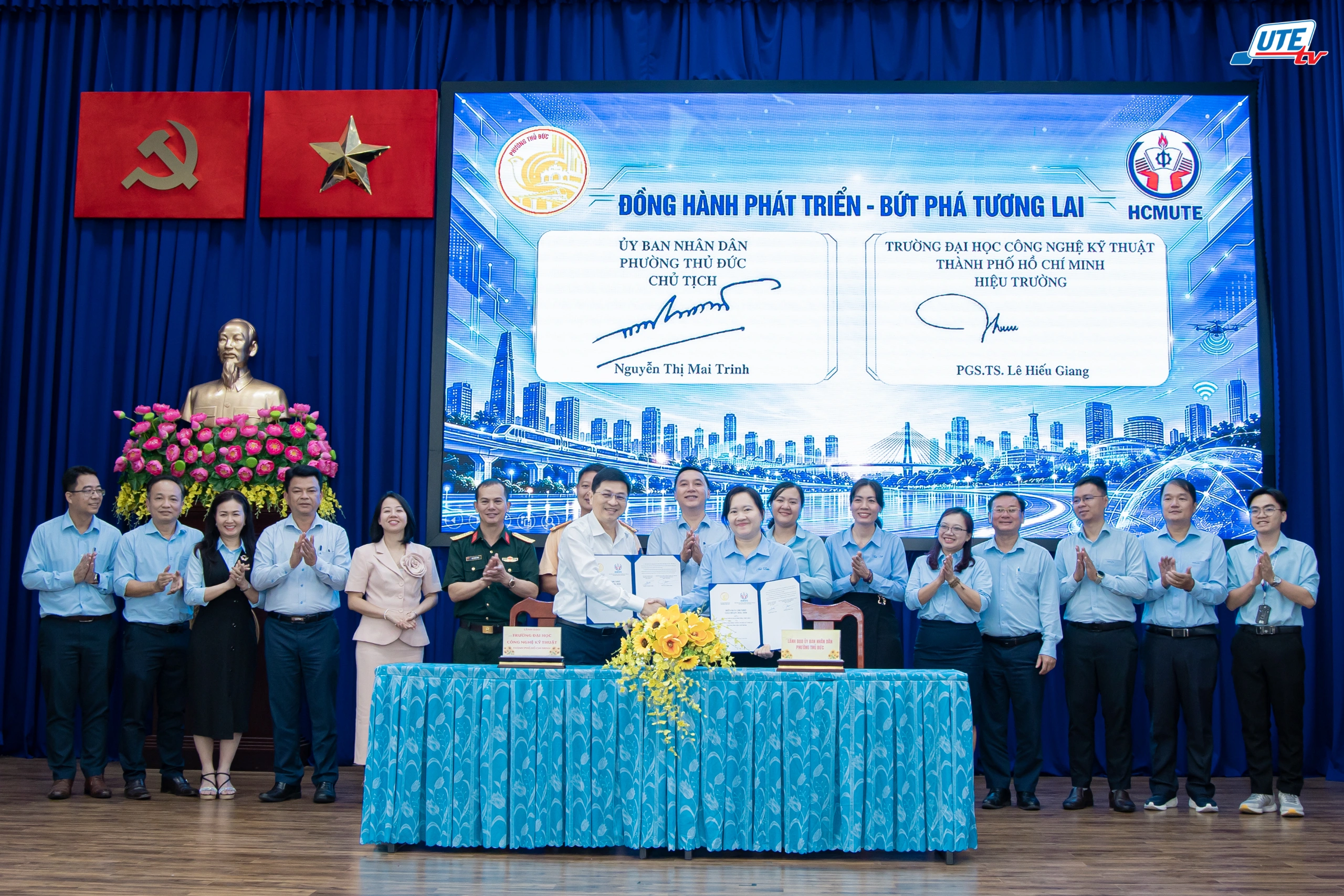
To ensure effective implementation, the two sides will develop annual action plans that set out specific objectives, deliverables, timelines, resources and responsibilities for each party, and will review and adjust them regularly in line with practical needs and legal regulations.
Speaking at the ceremony, Assoc. Prof. Dr. Le Hieu Giang, Secretary of the Party Committee and President of HCM-UTE, emphasized the University’s approach to the partnership: building on its strengths in training, scientific research and technology development, and linking its academic work with the ward’s practical needs and development priorities. The University sees the agreement not only as an opportunity to expand its cooperation with the local government, but also as a way to apply the knowledge, research results and creativity of its staff, lecturers and students to concrete, real-world problems. Through the program, HCM-UTE aims to strengthen ties between its academic units and local agencies and organizations, and to give lecturers, students and research groups more opportunities to take part in research, consulting, technology transfer and application. The University also hopes to work with the ward to gradually develop practical models that make effective use of science and technology resources, helping to drive innovation and digital transformation and improve residents’ quality of life.
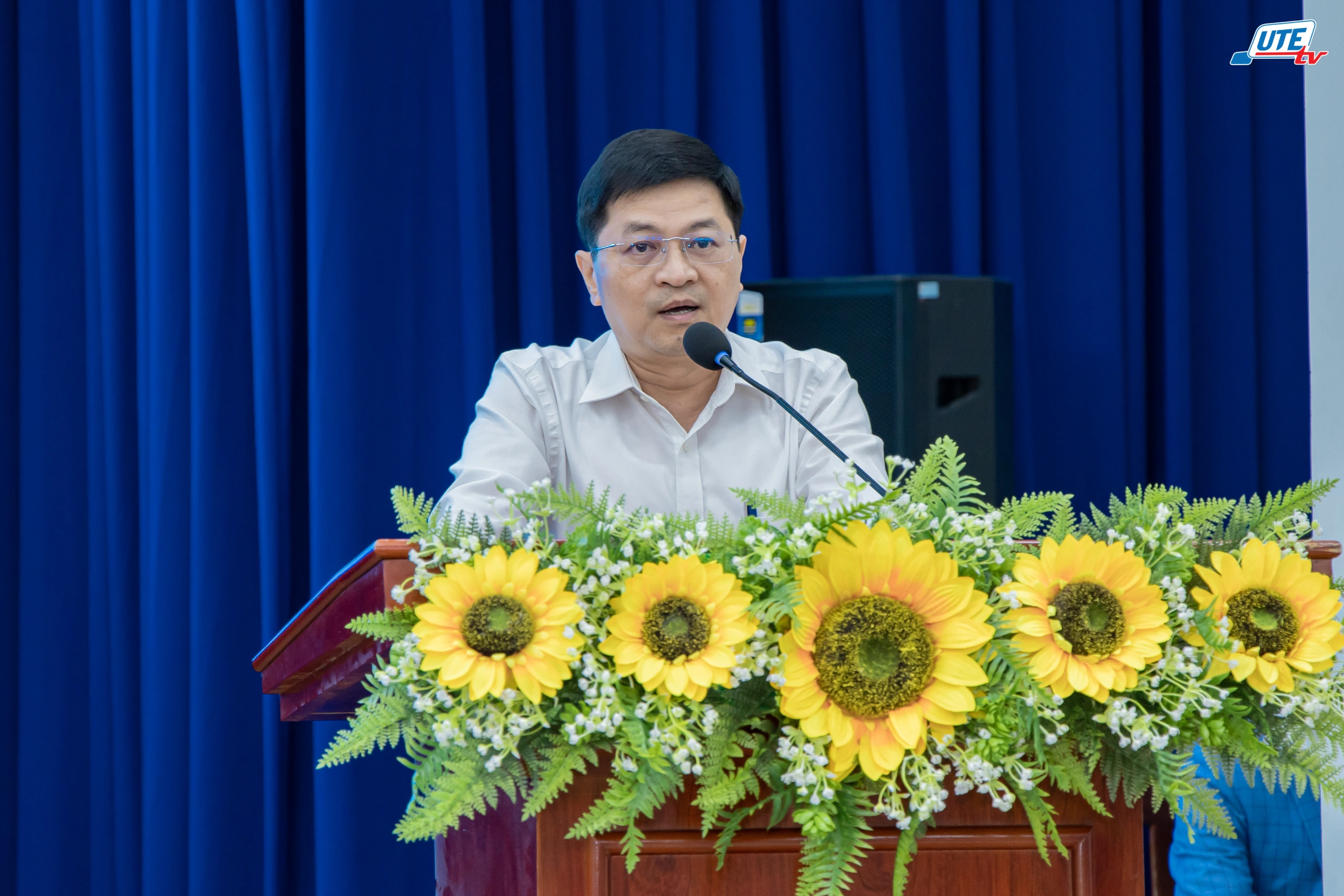
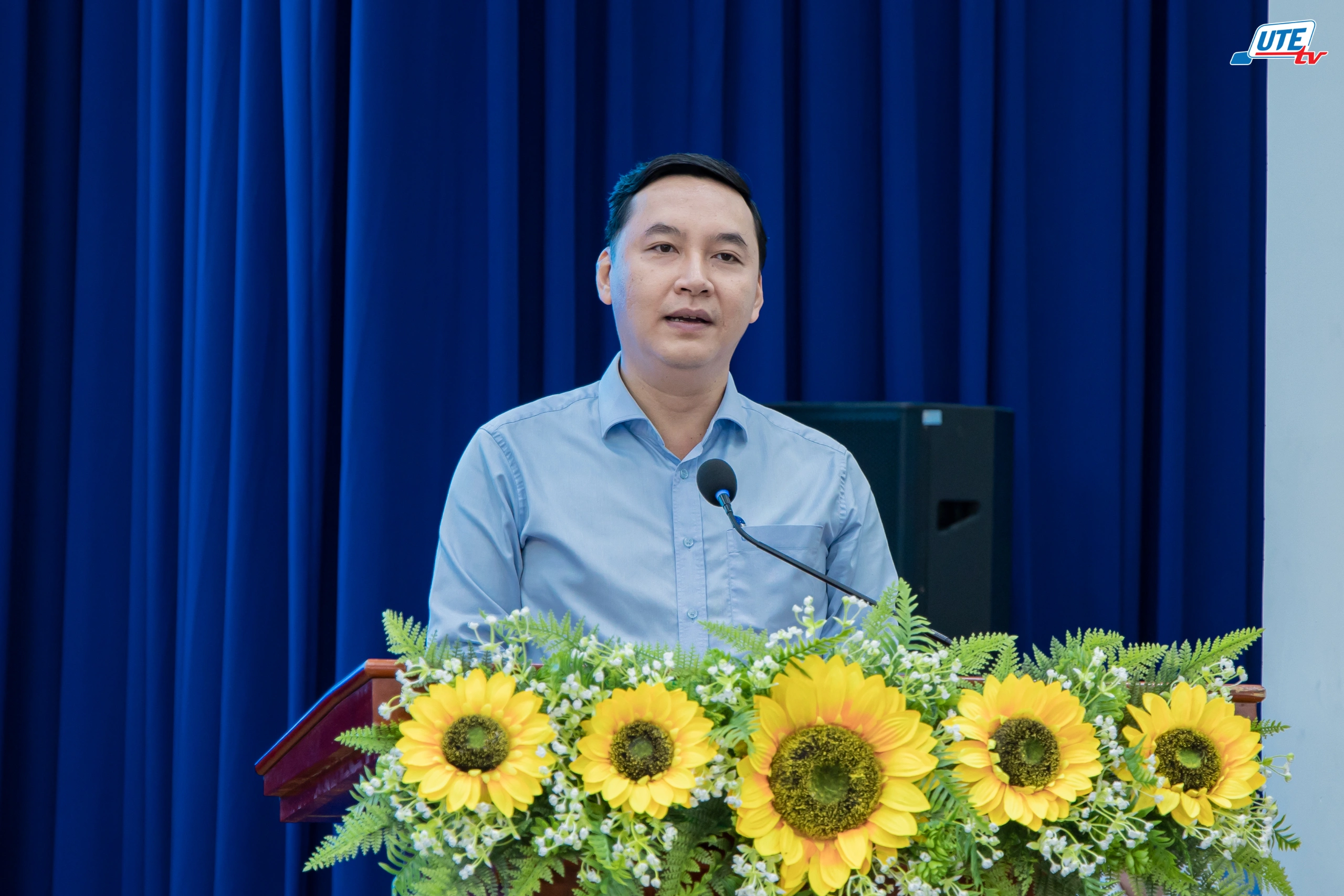
Delivering remarks at the ceremony, Mr. Mai Huu Quyet, Secretary of the Ward Party Committee and Chair of the Thu Duc Ward People’s Council, highly appreciated the significance of the partnership in connecting knowledge and science and technology resources with practical needs. Mr. Mai Huu Quyet expressed the hope that cooperation between the two sides would go beyond the agreed document and be translated into practical programs and activities that bring tangible results and contribute to the ward’s development. To achieve the program’s goals, Mr. Mai Huu Quyet highlighted three priorities: first, the agreement must be implemented substantively and effectively, with specific tasks and measurable results; second, cooperation should be comprehensive, drawing on the strengths of both sides across many fields; and third, participation should be broadened to include relevant stakeholders, businesses and organizations, mobilizing more resources, strengthening coordination and creating favorable conditions to put the agreement into practice.
Connecting Local Needs with the University’s Science and Technology Resources
Speaking at the event, Ms. Tran Thi Hong Thuy, member of the Ward Party Committee and Vice Chair of the Thu Duc Ward People’s Committee, shared the ward’s digital transformation priorities and practical needs. Digital transformation at the grassroots level, Ms. Tran Thi Hong Thuy noted, needs to address specific issues in urban management and development, such as infrastructure monitoring, management of urban space, improving the living environment, and making information and services more accessible to residents.
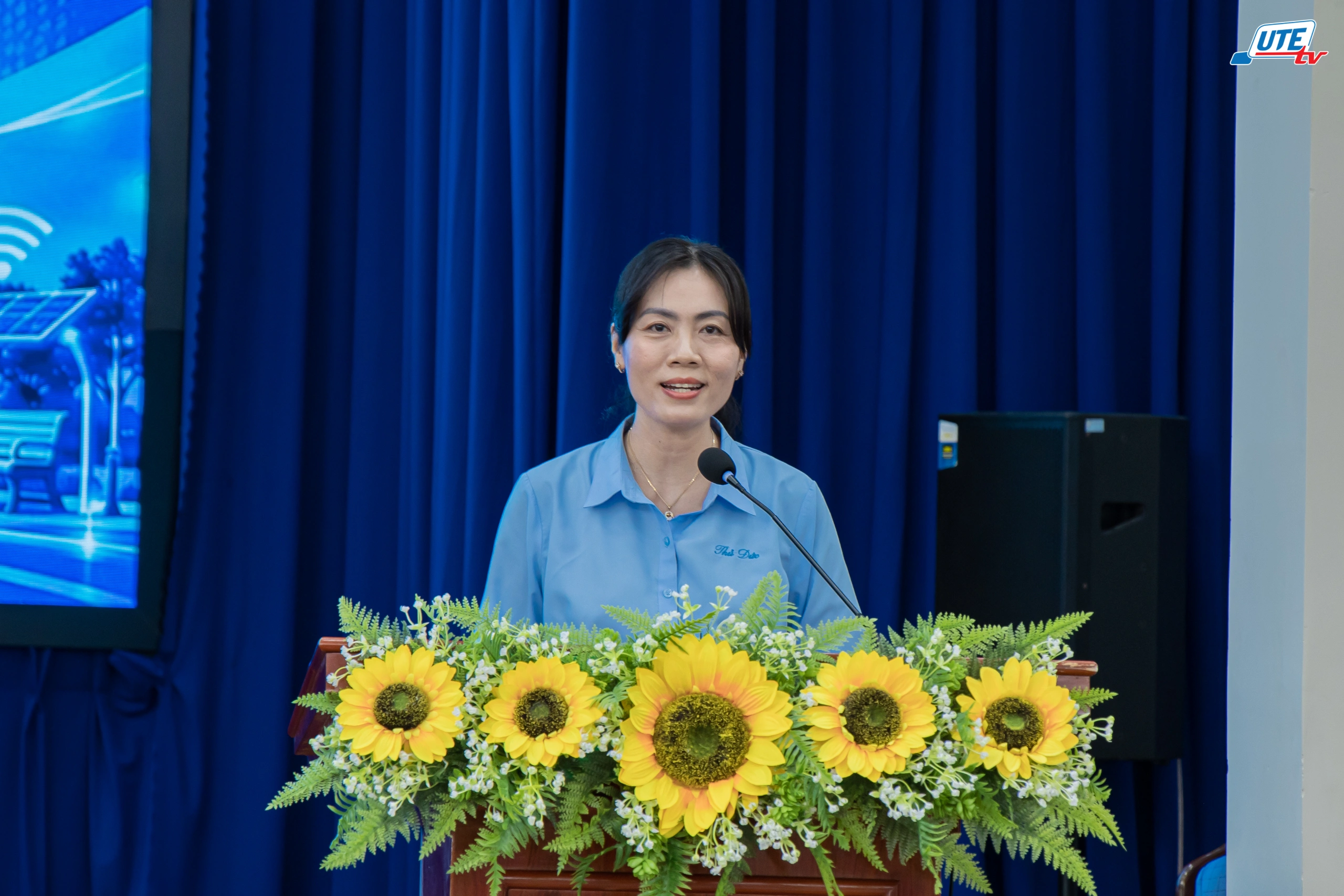
With this in mind, Thu Duc Ward hopes to strengthen its connections with HCM-UTE’s experts, scientists and research resources to identify and develop technology solutions suited to local conditions. Cooperation models will be studied, assessed for feasibility, gradually refined and put into practice once they meet the necessary requirements.
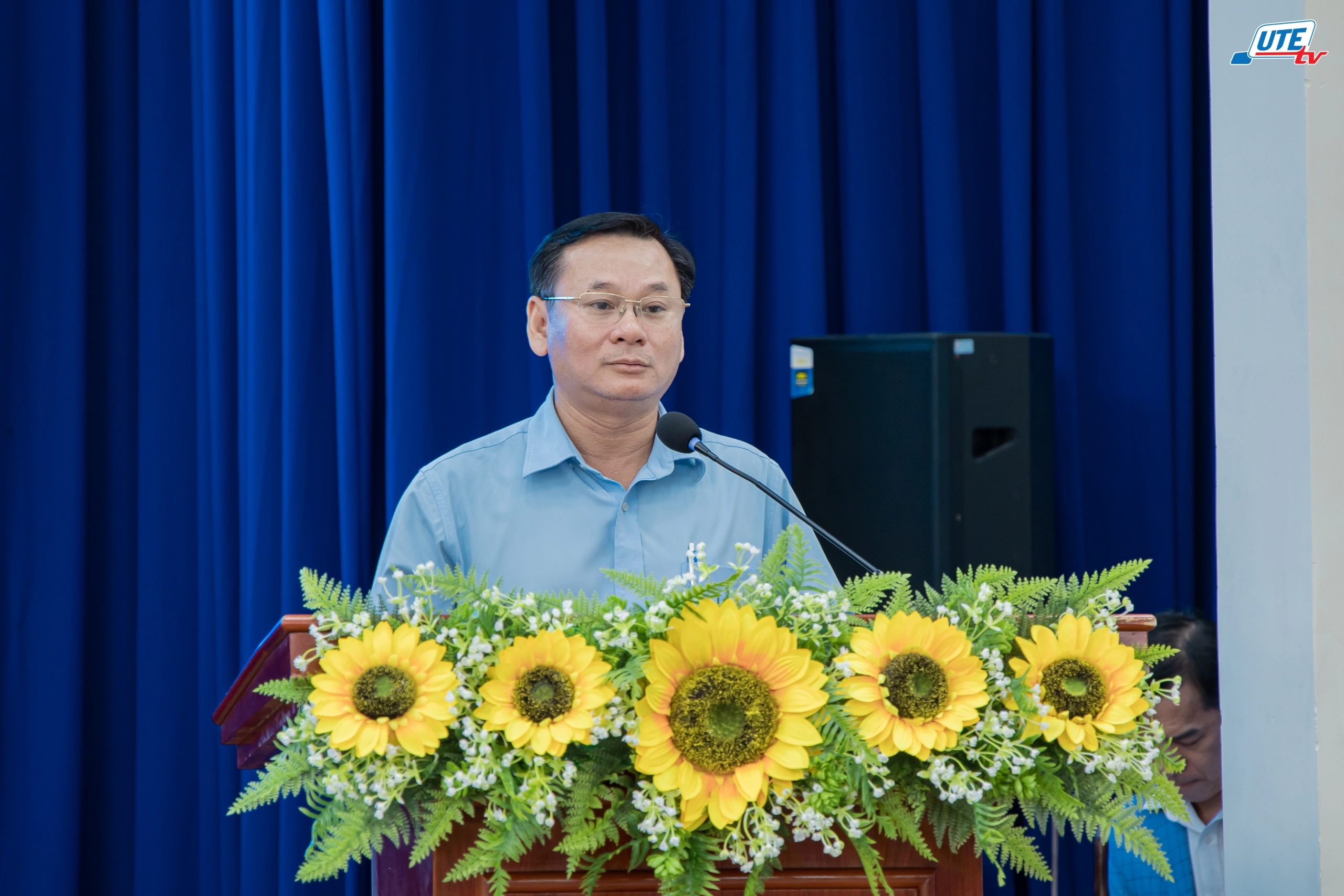
From the University’s perspective, Assoc. Prof. Dr. Truong Nguyen Luan Vu, Member of the Standing Committee of the University Party Committee, Dean of the Faculty of Mechanical Engineering and a deputy of the Thu Duc Ward People’s Council, outlined HCM-UTE’s potential, strengths and capacity to contribute to the partnership. With its focus on linking training, scientific research and practical application, the University is well positioned to mobilize the expertise of its lecturers, experts, students and research groups, connecting knowledge with specific challenges in urban management and development and community service.
Two Technology Models Proposed for Local Application
As part of the program, Dr. Ha Le Nhu Ngoc Thanh, a lecturer at the Faculty of Mechanical Engineering, presented on behalf of the research group two technology models proposed for joint research and development by the University and Thu Duc Ward: a UAV model to support urban management and a Digital Park model with smart amenities.
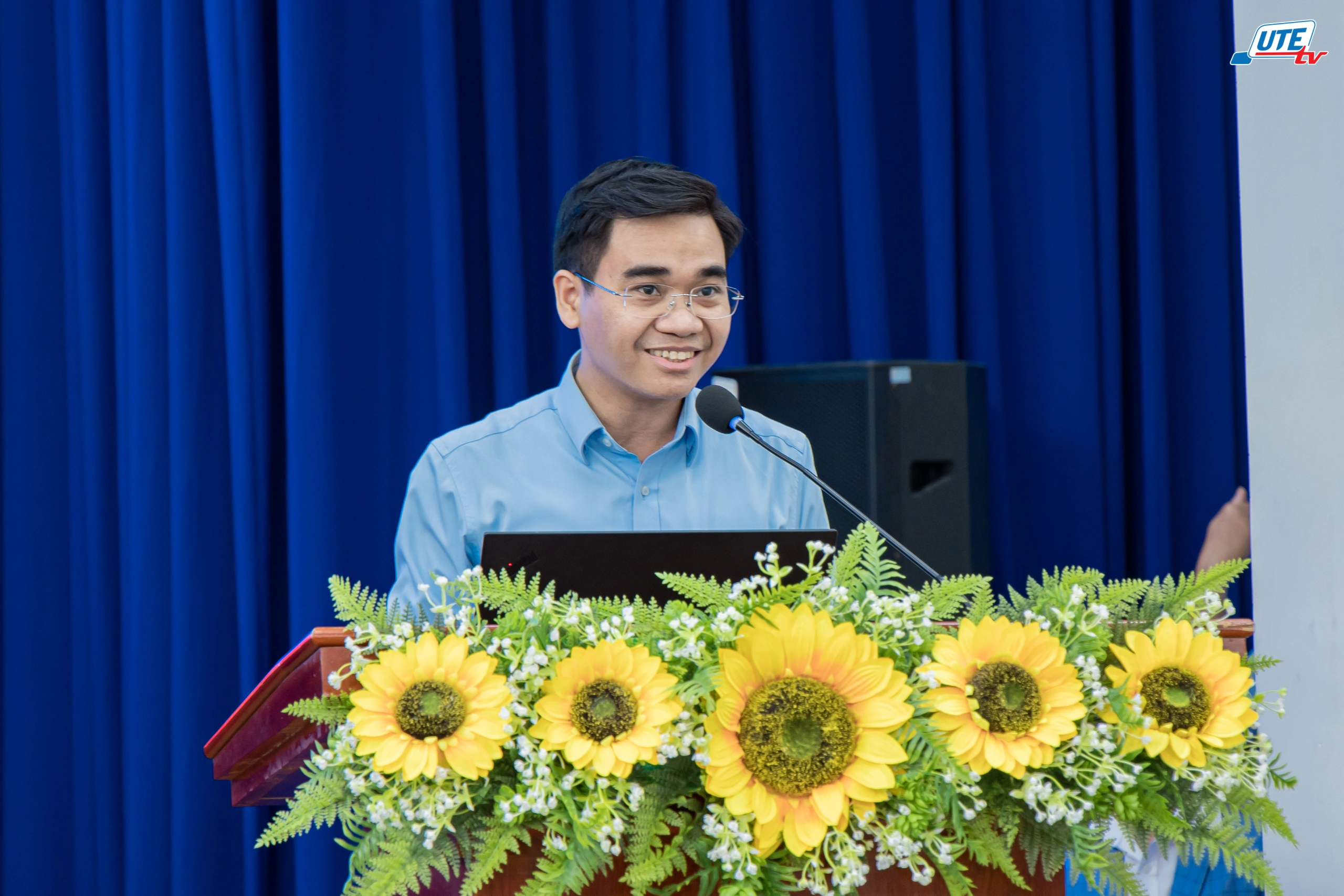
The UAV model aims to support urban management through the use of unmanned aerial vehicles, helping to collect data, monitor on-the-ground conditions and detect emerging issues in the area. The technology is expected to give the relevant authorities an additional tool for monitoring, management and the efficient use of local resources.
The Digital Park model aims to integrate technology amenities into public spaces to enhance residents’ experience and the quality of public services. Proposed amenities include smart benches and multi-function smart lighting systems, helping to create community spaces that are more modern, friendly and convenient.
The two models are concrete proposals that connect the University’s research, design and technology development capabilities with the ward’s practical needs. Building on them, the two sides will continue to work together on research, feasibility assessment, technical refinement and a suitable implementation roadmap.
The 2026–2030 cooperation agreement provides a foundation for HCM-UTE and the Thu Duc Ward People’s Committee to strengthen their ties and make the most of each side’s strengths in scientific research, innovation, digital transformation and community service. Through this partnership, the connection between local government, the University and the community is expected to become increasingly substantive, bringing knowledge and technology to bear on everyday issues and supporting the ward’s vision of “a happy, caring Thu Duc on the rise.”
About the University’s Name Change: On December 26, 2025, the Prime Minister of Vietnam issued Decision No. 2809/QĐ-TTg, officially renaming Ho Chi Minh City University of Technology and Education to Ho Chi Minh City University of Technology and Engineering (HCM-UTE). The new name reflects the University’s multidisciplinary development strategy, its strengths in technology and engineering, and its current institutional stature. Before 2007, the University was Vietnam’s leading institution for technical teacher education. Following changes to the national higher education program classification system in 2007, the University expanded its focus to technology, engineering, and related disciplines. The name change aligns with Vietnam’s Higher Education Network Development Plan for 2021-2030 with a vision toward 2050, addresses the demand for high-quality human resources in the digital transformation era, and reaffirms HCM-UTE’s role as a national key university in technology and engineering. |
|---|
Text: Hoang Tu, Nhat Tan – Translation: PP